Real Talk: Real Hair | By Jackie Wilt | Wild Soul Salon & Head Spa
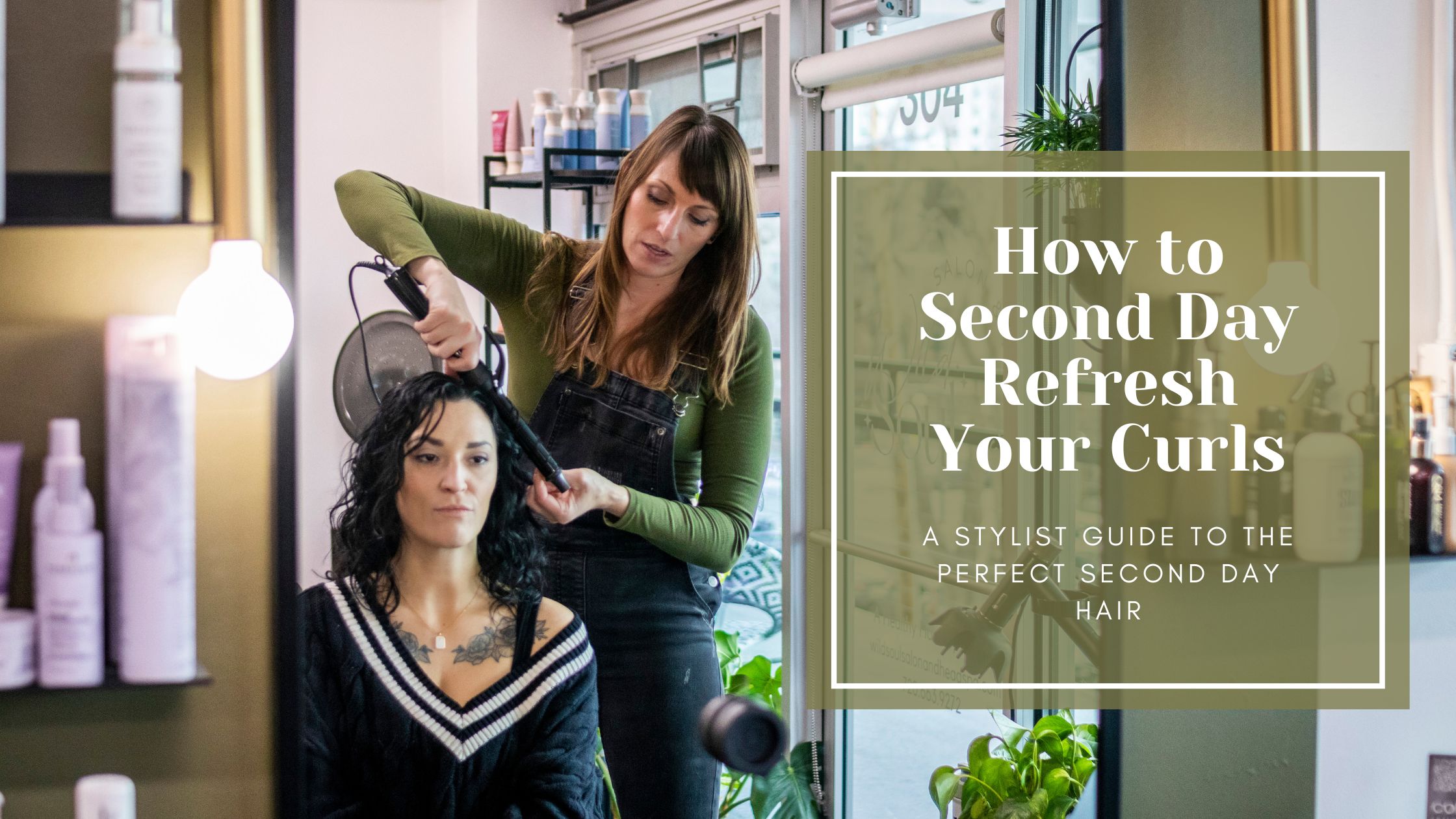
If you’ve ever woken up on day two and thought, “well, that’s it, I’m washing it again,” you are not alone, and you are not doing anything wrong. The answer is simple: refresh with moisture first, not water, and only touch up the pieces that actually need it. You don’t need to start over. Most of the frustration I see in the chair comes down to one thing: clients don’t know how to properly refresh, so they assume their curls just can’t hold up, and they start over from scratch. Let’s change that.
Why Your Day-Two Curls Feel “Ruined” (They’re Not)
Here’s what I hear all the time: a client feels like she’s lost all her definition, her hair feels flat or oily at the roots, and she sees a little frizz and immediately thinks the whole style is done. So she rewashes, or she gives up and throws it in a bun.
But losing a little definition overnight isn’t a sign of failure. It’s just what curly hair does while you sleep. The goal of a refresh isn’t to redo your entire style. It’s to edit what got disrupted overnight and bring back what’s already there.
Start With Moisture, Not Water
This is the one I want you to really sit with, because it goes against what most of us have been taught. Most of my clients assume a refresh starts with a spray bottle full of water. I actually don’t recommend that, especially if you’re using water-soluble products, which most good curl products are. Water-soluble products are delivered into the hair by water, and they’re also broken down by water. So spraying your hair down first thing in the morning is quietly undoing yesterday’s work before you’ve even started.
Here’s what I recommend instead:
- Start with a light oil or a small amount of curl cream, whichever feels lighter on your hair type. If both feel heavy, you may not be using the right formula for your texture.
- Break your hair into sections, top from bottom, and check inside the sections for frizz, not just on the surface.
- Glide the product over any frizzy areas until things calm down.
- Once the frizz has settled, bring back hold with a curl refresh spray, or mix a small amount of yesterday’s gel or mousse with a bit of water in your palm and scrunch only where you’ve lost curl definition.
That’s it. You’re not restyling your whole head. You’re touching up the parts that shifted overnight.
One Exception: When a Full Rinse Actually Makes Sense
Not every hair type does well with this approach, and that’s important to say out loud. If your hair is fine, oily, and tends to fall almost completely straight overnight, you’re probably better off with a light rinse and re-style rather than trying to refresh. For those clients, I recommend skipping shampoo every other wash but cleansing the scalp with your fingertips like you’re exfoliating, rinsing with water, following with conditioner (since water’s pH is higher than your hair’s), and then restyling as usual.
There is no universal answer here. It depends entirely on your specific hair type, not on the general idea that curly hair should behave a certain way.
Allie’s Story: Why Her Second-Day Refresh Never Worked
I want to tell you about a client I worked with, Allie, because her situation might sound familiar. Allie was convinced her second-day refresh simply didn’t exist. She’d resigned herself to a bun on day two and was seriously considering going back to straightening her hair full time because she loved how it looked on day one and only day one.
When we sat down and talked through her actual routine, a few things became clear.
First, she was applying her products to wet hair right before bed on wash day, styling her hair, then going to sleep with it still wet. That meant her gel never had the chance to fully set, and her curls kept shifting positions all night, essentially breaking the cast the same way scrunching out too early would. So by day two, her hair already looked more like a day-three style.
Second, her products weren’t quite strong enough to hold through the night. We added a light pump hairspray for extra resistance before bed.
Third, and this was the real turning point, she was pulling her hair up into a bun to sleep. Any time your hair is forced into a shape overnight, whether that’s a bun, a ponytail, or a braid, it creates creasing that has nothing to do with your natural curl pattern and everything to do with how it was held while you slept.
So we made three changes: she started showering with enough time for her hair to fully dry before bed (or used a diffuser to speed things along), she added a touch more hold before sleeping, and she swapped the bun for a loose pineapple at the crown using a satin scarf or scrunchie, topped with a bonnet (like the one beautiful black woman you see walking around protecting their curls. Just acknowledge where this practice came from) This lifts the roots instead of pressing them flat under the weight of the hair, and it avoids the creasing that a bun or braid creates.
From there, she used the same edit-don’t-redo refresh method above. Her second-day hair has looked like second-day hair ever since, not third or fourth. And honestly, having someone walk her through this in person made all the difference. That one-on-one troubleshooting is exactly what I offer in virtual consults, because reading about a refresh and having someone actually watch your hair and adjust the method for you are two very different experiences.
The Refresh Myth I Want to Retire
Please, put down the spray bottle. Drenching your hair with plain water first thing in the morning feels refreshing in the moment, but it breaks down whatever hold and protection is already in your hair. By afternoon, you’ll be fighting more frizz than if you’d never touched it at all.
If you want a gentler way to reintroduce moisture, a hair steamer is a wonderful tool. It brings flexibility back into the hair and softens products enough to work with again, without the soak-and-start-over effect of a spray bottle.
Tools and Products Worth Having on Hand
A few things I recommend keeping in your refresh toolkit:
- A dedicated style refresh spray (I’ve had good luck with a few from Ouidad over the years)
- A lightweight, non-drying dry shampoo for the scalp when oil is the main issue at the roots
- A texturizing dry shampoo when the goal is volume and lift rather than oil control
- A thermal protectant spray, something light that also softens the hair and adds a bit of humidity resistance
Whatever you’re currently using, the most important question is whether it actually feels good on your hair and works for your specific texture. If your gel is leaving you crunchy, look for something closer to a serum consistency. Your styling cream should never sit on top of the hair and coat it.
And here’s a permission slip I like to hand out: it is completely fine to grab a curling iron for that one curl that just won’t cooperate, whether it’s framing your face or sitting at the crown. You don’t need to curl your whole head. Just don’t skip the thermal protectant, and treat it the same way you’d treat sunscreen: every time, no exceptions.
Building a Nighttime Routine That Actually Protects Your Curls
Your night routine matters just as much as your morning refresh. Here’s what I recommend:
- Apply a light oil to your hair before bed as a small overnight treatment to help resist frizz. One that actually absorbs into your hair and doesn’t just sit on top.
- Flip your head forward or upside down, and either wrap a scarf snugly around the back (not on top) or gather your hair into a loose pineapple at the crown with a satin scrunchie.
- Sleep on a satin or silk pillowcase.
- If you’re a sweaty sleeper, which is common during things like menopause, factor that into your product choices. An anti-humidity spray can help offset the extra frizz that comes from heat and moisture overnight.
- Shorter hair doesn’t necessarily need the pineapple. If flipping forward into a bonnet captures everything at once, that’s a perfectly good shortcut.
How Many Days Can You Actually Go Between Washes?
Here’s an opinion I hold pretty firmly: stop trying to hit a specific number of days based on your curl type. I’ve talked about this in other posts on wash frequency and curl type, and the truth is your scalp, not your curl pattern, should be the deciding factor.
Generally speaking, most clients get one to three days out of a refresh if they have a strong curl pattern. If you have a wavier texture, one to two days is more realistic, and getting three to five is rare. Chasing a five-day routine when your hair type simply isn’t built for it just creates frustration.
The longer you stretch between washes, the more dehydrated your hair becomes, especially if it’s already prone to dryness. If that’s you, wash more often so you can get conditioner and treatments back into your hair regularly. And if you are stretching multiple days, make sure you’re reintroducing hydration daily through oil, cream, or a spray conditioner.
Scalp Health Is Non-Negotiable
If your scalp is itching, flaking, or irritated, that is not a dry shampoo problem, that’s a wash-it problem. Those symptoms can point to bacterial buildup, and layering dry shampoo on top of it repeatedly over time can contribute to hair loss. This is exactly why I take a scalp-first approach with every client. A healthy refresh routine starts with a healthy scalp.
What About Workouts and Sweat?
My advice doesn’t change much for active clients, but I do recommend leaning more heavily on anti-humectant products if sweat is a regular factor. Keep in mind that sweat at the root causing frizz is much harder to refresh than frizz at the ends, so that’s where your attention and product should go first.
Practice Makes Perfect, Not Perfect Hair Days
Here’s what I want you to walk away with: there is no one-size-fits-all refresh routine, and there’s no such thing as perfect hair, even with the best routine in the world. Climate, nutrition, stress, and sleep habits will affect your curls just as much as any product you use. Some days will just be off, and that’s normal.
Key Takeaways
- Refresh with moisture first, not water. Water-soluble products are broken down by water, so a spray bottle full of it first thing in the morning undoes yesterday’s work.
- A refresh is an edit, not a redo. Only touch up the sections that actually lost definition overnight.
- If your hair is fine, oily, and falls flat overnight, a light rinse and re-style may work better for you than a traditional refresh.
- How you sleep matters as much as what you apply. Buns, ponytails, and braids create creasing; a loose pineapple or scarf wrap protects your curl pattern instead.
- Let your scalp, not your curl type, decide how often you wash. Itching, flaking, or irritation means it’s time to wash, not time for more dry shampoo.
- There’s no universal “right” number of days between washes. One to three days is realistic for most strong curl patterns, and chasing five days when your hair isn’t built for it just creates frustration.
- Sweat at the root is harder to refresh than sweat at the ends, so that’s where extra anti-humectant products should go.
- A curling iron on one or two stubborn pieces isn’t cheating. Just protect the hair with a thermal spray every time.
If you’re tired of guessing and want a routine built specifically around your hair type, your scalp, and your lifestyle, that’s exactly what I help clients figure out in a virtual consult. Let’s build a refresh routine that actually works for your curls.