Years ago, I started a journey that completely changed how I look at stress, resilience, and well-being. It was a journey born out of sheer frustration. I was doing everything “right.” I had standard self-care practices in place. I scheduled the massages, took the mini-vacations, and implemented every wellness tip and trick I could find.
Yet, despite all these external efforts, I was still feeling constantly stressed, worried, and completely on edge. It felt like I was running on high alert, and no amount of pampering could turn the dial down.
It was not until I took a more holistic approach to my well-being that real, lasting changes became consistent. The turning point was shifting my focus away from surface-level fixes and toward a bottom-up, somatic approach that targeted my nervous system.
After going through this process myself and bringing these somatic tools to my clients, I realized how many others are trapped in this exact same cycle. Millions of people are practicing standard self-care but still feeling miserable. We need to talk about what nervous system dysregulation actually feels like and, more importantly, how to actually begin supporting your system from the body up.
What is Nervous System Dysregulation?
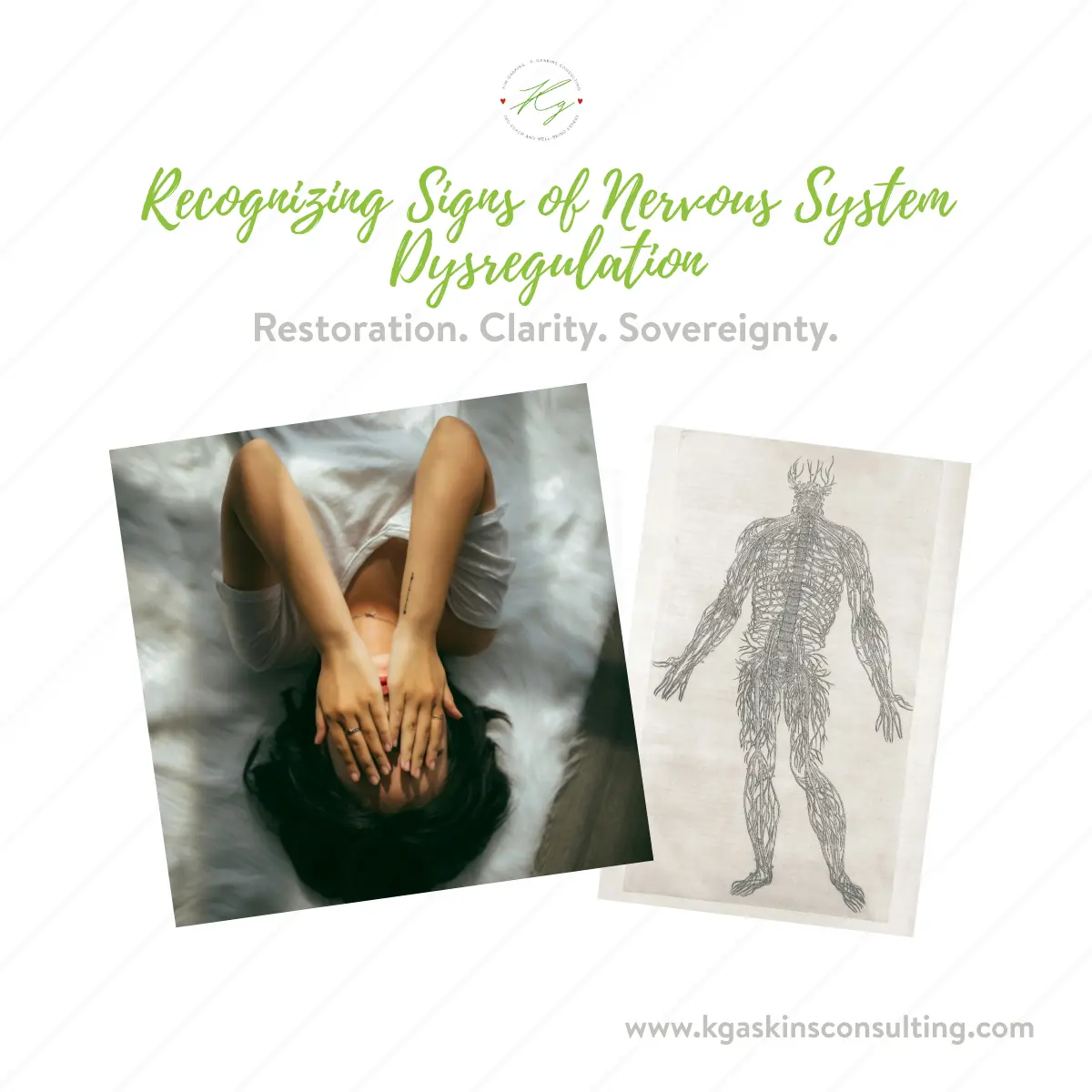
To understand dysregulation, we first have to understand what a regulated nervous system does. Your nervous system is your body’s command center. It continuously scans your environment to decide if you are safe or facing a challenge, adjusting your heart rate, digestion, energy levels, and muscle tension accordingly.
When your nervous system is regulated, it is resilient. It can experience a stressor, react appropriately, and then quickly return to a state of calm, ease, and safety.
When your nervous system becomes dysregulated, it loses this resilience. It gets “stuck” in a state of survival. You are no longer responding to the actual reality of your life; instead, your body is constantly reacting as if an invisible threat is looming, leaving you feeling chronically exhausted, hyper-vigilant, or completely shut down.
How Your Body Holds Onto Dysregulation
When your nervous system is out of balance, your emotional stability can feel shaken. You might find yourself trapped in cycles of chronic worry, sudden waves of low mood, or a heavy, persistent brain fog that makes simple decisions feel monumental.
But because the mind and body are intrinsically connected, your physical form holds onto this stress long before your intellect can fully process it.
The Physical Signs of an Overwhelmed System
In my own journey and in my work with clients, I have watched dysregulation manifest in highly specific physical sensations. It often looks like:
- Chronically tight hips and lower back tension: The psoas muscle, often associated with our physical fight-or-flight response, contracts when we feel threatened. Chronic stress keeps this area tightly locked.
- Tense shoulders and a clenched jaw: Carrying daily pressure physically manifests as hiked-up shoulders and a tight neck.
- Unexplained body aches: General physical tension and aches that seem to appear for no obvious physical reason and refuse to go away with simple stretching.
- Pervasive, heavy exhaustion: Feeling sleepy and drained no matter how many hours of rest you get, because your body is spending all of its energy keeping you on high alert.
Dysregulation shows up differently for everyone. It is absolutely essential that we learn our own unique warning signs so we know exactly when we need to step back, pause, and reset.
Moving From Top-Down “Self-Care” to Bottom-Up Regulation
When people feel stressed, they usually try a “top-down” approach. This means using your mind to try and convince your body that everything is fine. You might try positive thinking, cognitive reframing, or booking external escapes like a spa day.
While these things have their place, they rarely work for an overwhelmed nervous system. If your physical body feels like it is fighting for its safety, a positive affirmation isn’t going to change its physical response.
A bottom-up approach, on the other hand, starts directly with the body. You use somatic (physical) practices to send signals of safety directly to your brain.
I realized I needed a somatic approach after I started practicing restorative yoga. Up until that point, my life was all about doing. Restorative yoga forced me to focus inward. It made me tune into my physical body and pay attention to what I was actually feeling in the present moment, rather than focusing on what I was doing.
In my nervous system regulation programs, I now teach a customized somatic reset. This is a vital practice because it helps clients tune back into their physical forms, allowing them to recognize the exact moments they are feeling tight, worried, or overwhelmed. It gives them a concrete set of tools they can use daily, or in the exact moments they find themselves stuck in their heads.
A Quick Somatic Reset You Can Try Right Now
If you are reading this and feeling overwhelmed, worried, or completely disconnected from your physical self, you can try a simple somatic reset right now. This is a tool I call The Ear Cup.
- Find a comfortable seated position and soften your gaze or close your eyes.
- Take both of your hands and gently place your palms over your ears, cupping them.
- Press lightly to create a gentle seal that completely muffles the external sounds of your room.
- Close your eyes and breathe deeply for thirty seconds.
- Focus your entire attention on the internal sound of your own breath, which will sound like the ocean inside your hands.
This simple tool creates an immediate container of physical safety. By shutting out external noise and focusing on your internal rhythm, you tell your brain that it is safe to drop out of busy thoughts and back into your body.
Why Regulation is a Fluid Practice, Not a Quick Fix
The single most common mistake I see people make when they first try to support their nervous system is expecting immediate, permanent results. They treat regulation like a task to cross off a to-do list.
They don’t realize that you must actively monitor your system and maintain ongoing, daily practices. Life is inherently fluid, which means your response to life needs to be fluid as well. Your nervous system is constantly responding to the world around you, so checking in with it is a lifelong conversation.
If you are reading this and realize that your nervous system is completely fried and you are in the depths of burnout, the gentlest step you can take today is to start small.
Do not make drastic time commitments, massive lifestyle overhauls, or major life decisions while you are in this state. Making big decisions from a place of burnout usually just adds more stress to an already overwhelmed system. Instead, commit to a simple daily somatic reset, learn to tune in to your body, and wait until your system is stabilized before making major changes.
What Does a Regulated Nervous System Actually Feel Like?
On the other side of this journey lies true clarity and self-awareness. Having a regulated nervous system doesn’t mean you will never feel stressed, angry, or overwhelmed again. It simply means you won’t get stuck there.
When your nervous system is resilient, you feel a deep sense of agency. You become much more willing to make healthy, gentle micro-changes in your life because your body is no longer stuck in survival mode.
Ultimately, you will know you have achieved inner peace and stability not because your external life is suddenly perfect, but because of the calm, grounded, and aligned way you choose to respond to your daily life.