BY: CHRISTINE CELIS
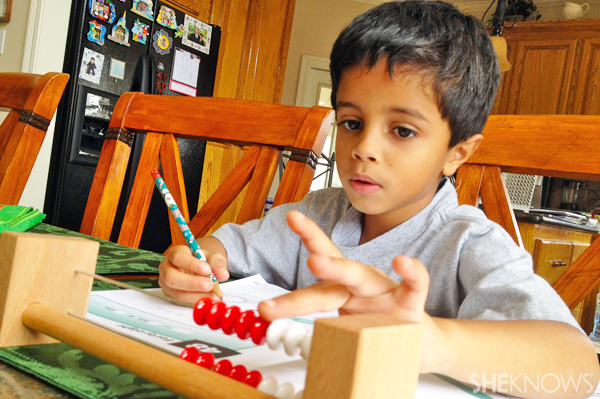
When you meet seven-year old Jacob for the first time, you would be charmed by his politeness and his ability to recognize flags and capitals of various countries in the world. You would expect him to be enrolled in a fancy private school, especially because of the fact that his parents are both successful business owners. However, it’s surprising when you find out that Jacob is unschooled.
“Unschooling” is a term that was coined in the 1970s by John Holt to describe a different method of learning that is purely based on a child’s interests. With unschooling, the child is in charge of what he or she wants to learn and not the parents. It is different from home schooling, in a sense that there is no pre-determined curriculum to follow and no tests to be taken.
It’s a relatively simple premise—passion is the best teacher.
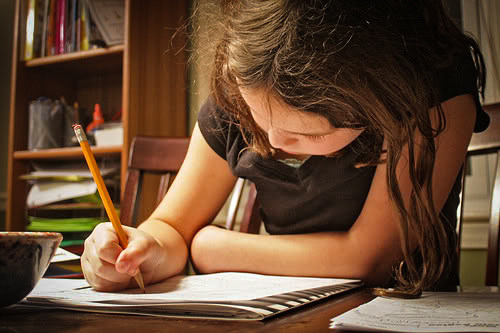 According to studies by the the Department of Psychology and Neuroscience at the University of Colorado, children were more skilled at “self-directed executive functioning” than those who spent longer periods of time in highly structured activities.
Joanne and Christopher, Jacob’s parents, decided to pull him out of school after discovering that their son didn’t do well in group settings.
“Jacob was enrolled at a private school when he was five, then me and my husband just decided to un-enrol him because we noticed that he was getting frustrated. He doesn’t like being distracted, so school only made him irritable when he got home. Some of our relatives have asked if I had Jacob tested—I have, and he’s a normal and happy boy. He just got the ‘loner’ gene from his father,” Joanne shared. “He’s smarter than other boys of his age.”
Some educators have protested that unschooling provides too much freedom for children, making them lack in essential skills and knowledge needed for future employment. Some have also mentioned about the method being not effective for all students.
“I have been called a bad mother just because my son is not in school. My son is well fed, he gets regular doctor’s visits, and my husband and me make it a point to read to him every night. Society focuses too much on grades, that they don’t know that it’s starting to get counter-productive. Once my son reaches college-age, we’ll cross the bridge when we get there. If he tells us that he wants to study at a real school, we would enrol him as soon as possible. At the end of the day, it will be Jacob’s decision. There’s no saying, but right now I enjoy spending as much time as possible with my son.”
 While Joanne freely chose to unschool her son, there are others who are unschooled because they lack the resources to enrol in a school. Lisa, 15, chose to be unschooled after her father got cancer. “As much as I want to get back to school, I can’t. I want all of our family’s money to be spent on our basic needs. Homeschooling costs money, but with unschooling, I get to learn for free. I go to the library to borrow books. Last week, I was trying to learn how to create extension cords. This week, I’m studying World War II. I know I should be in college soon, but the fees are too much. I don’t want my parents to have debt because of me.”
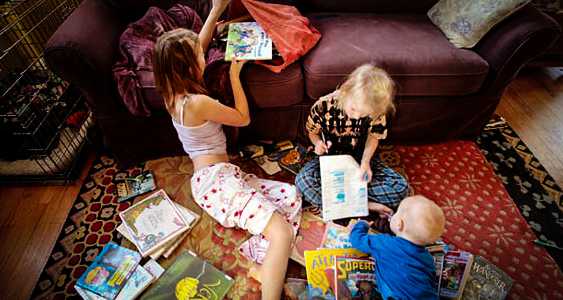 Lisa Harvey-Smith, an astrophysicist, and Professor Jedediah Purdy, an author and professor at Duke University’s law school are both examples of successful unschooling students. Although opponents may consider the method a “hippie” type of schooling, those living on the fringes of society are far from the only people practicing it.
Regardless of the divisive opinions of parents, with the rise of tuition fees, the seeming frailty of the public school system and the increasing popularity of MOOCs and TED Talks, unschooling is becoming more sustainable as an alternative option.
Here is a TEDx Talk by a young innovator on his experience and philosophy working outside the traditional models of education:
The concept is still a foreign matter to a society where most citizens have attended school for at least ten to twelve years of their lives. Traditional schooling has become culturally engrained.
Although there are still years of innovation to come before unschooling is defined as an accepted alternative to curriculum-based learning, for now Joanne is pleased with the method.
“I don’t want to argue with people who always try to tell me how to raise my child. Every child is beautiful, but they are not all the same when it comes to education. I’m not against formal schooling, but I’ve been pleased with what unschooling has done for my child.”