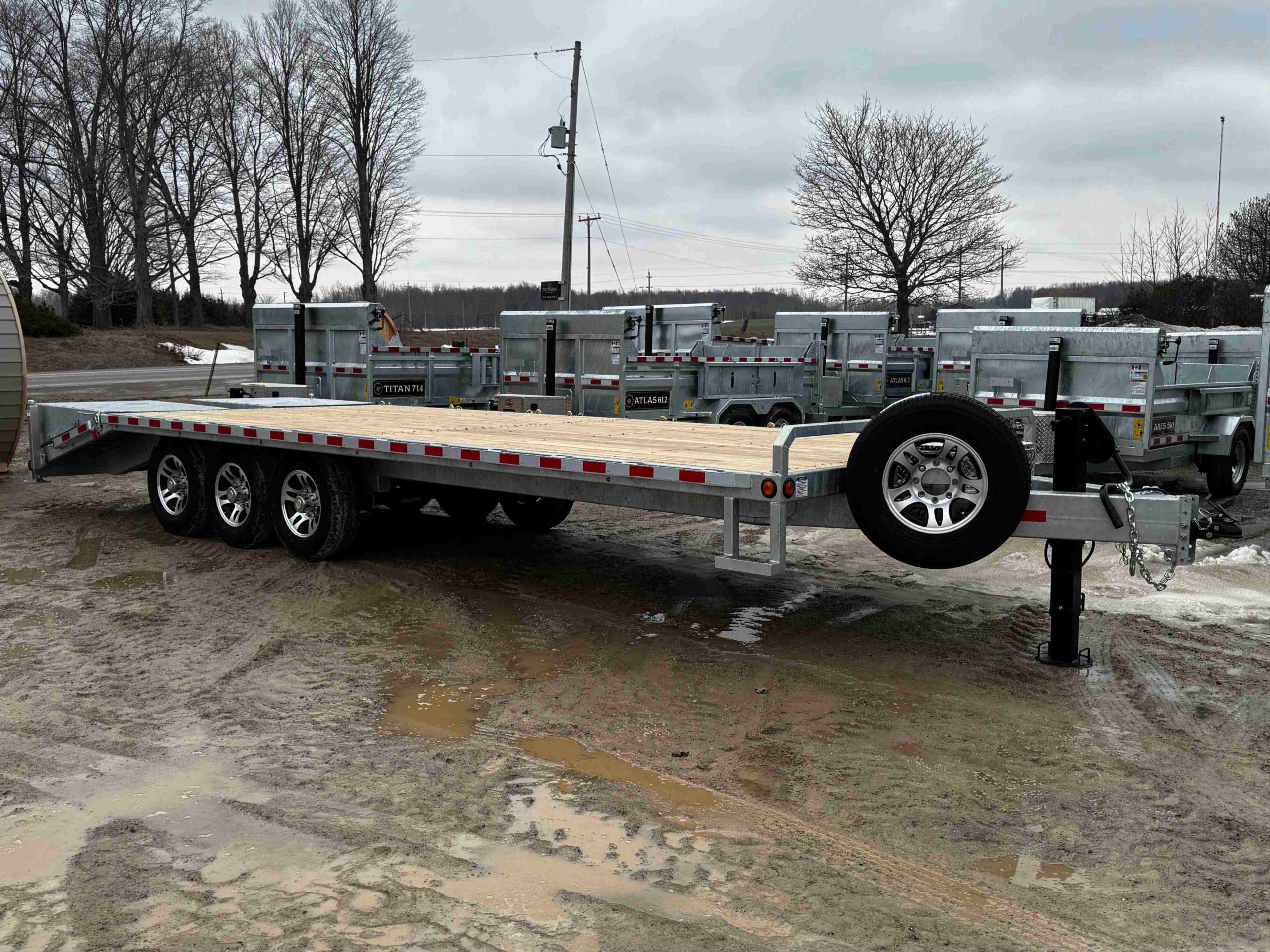
When customers come in asking whether they should buy an aluminum or steel trailer, the honest answer is that it depends on how the trailer is going to be used.
There isn’t a one-size-fits-all solution here. Both materials have strengths, and in my experience, the “best” choice usually comes down to truck size, cargo weight, and how often the trailer will be used.
Steel trailers are typically heavier and more heavy-duty by nature, while aluminum trailers are significantly lighter and offer excellent corrosion resistance. Both can be very durable when used correctly and within their intended limits.
The Real Difference Between Aluminum and Steel Trailers
One of the biggest misconceptions is that one material is simply “better” than the other. That’s not really how it works.
Each material brings its own advantages depending on the application:
Steel trailers
- Heavier duty construction
- Higher resistance to rough, daily abuse
- Better suited for heavy equipment and jobsite use
- Typically paired with 3/4-ton and 1-ton trucks
Aluminum trailers
- Much lighter weight
- Excellent corrosion resistance
- Easier to tow with smaller trucks and SUVs
- More prone to cosmetic dents and scratches under rough use
The key difference is not just strength—it’s how each material behaves over time in real-world use.
Who Should Choose a Steel Trailer?
In my experience, steel trailers are the better choice for customers who are using their trailer regularly in demanding environments.
This includes:
- Contractors hauling equipment daily
- Farmers moving heavy loads
- Construction and jobsite work
- Customers using 3/4-ton or 1-ton trucks
Steel trailers are heavier, but that weight comes with durability. They tend to handle rough loading conditions, jobsite abuse, and frequent use better than aluminum.
When used properly and within their rated capacity, steel trailers can hold up extremely well over time.
Who Should Choose an Aluminum Trailer?
Aluminum trailers tend to be a better fit for lighter, more occasional use.
They are commonly chosen by:
- Homeowners
- Landscapers with lighter loads
- ATV and recreational users
- Customers towing with smaller trucks or SUVs
The biggest advantage of aluminum is weight. A lighter trailer is easier to tow, easier to maneuver, and puts less strain on smaller vehicles.
Another major factor—especially in Southern Ontario—is corrosion resistance. With road salt and winter conditions, aluminum performs very well long term because it doesn’t rust the same way steel can.
That said, aluminum is not “fragile,” but it will show dents and scratches more easily if it’s used in rough, high-impact environments.
A Real-World Customer Example
We often see customers come in with a clear idea of what they think they need, and then adjust once we talk through how they’ll actually use the trailer.
One example is a customer who came in looking for a steel utility trailer for general home use and landscaping work. After discussing their truck, usage frequency, and the environments they’d be towing in, they ultimately decided on an aluminum utility trailer instead.
The two biggest deciding factors were:
- Lighter towing weight
- Strong resistance to rust and corrosion
For their situation, especially with winter use in Ontario, aluminum ended up being the more practical long-term choice.
Steel vs Aluminum in Real-World Conditions
When you look past the spec sheet, the differences become more about day-to-day life than raw strength.
- Handle abuse and heavy use better
- Are more forgiving in rough jobsite conditions
- Can support higher GVWR in many cases due to heavier construction
Aluminum trailers:
- Are significantly lighter overall
- Resist rust, especially in salted winter conditions
- Are easier to tow for casual or recreational users
It’s important to understand that both options can last a long time when properly maintained and used within their limits.
Galvanized vs Powder Coated Steel Options
Steel trailers also come with different protection options, and this plays a big role in long-term durability.
Galvanized steel
- Highly resistant to rust and corrosion
- Very low maintenance over time
- Excellent for long-term durability in harsh climates
Powder coated steel
- Lower upfront cost
- Available in different colours and finishes
- Requires occasional touch-ups to prevent rust from developing
In general, galvanized steel offers the best long-term protection, while powder-coated steel is more budget-friendly at the start but requires more maintenance over time.
Long-Term Ownership and Maintenance
When properly used and maintained, aluminum, galvanized steel, and well-kept powder-coated steel trailers can all last for many years.
The key factor is not just the material itself, but how the trailer is treated:
- Staying within payload limits
- Loading cargo properly
- Avoiding unnecessary abuse or overloading
If those basics are followed, all three options can provide reliable long-term performance.
A Simple Rule of Thumb for Choosing Between Aluminum and Steel
When customers are unsure, I usually simplify it like this:
If you are using your trailer daily for heavy-duty work with a 3/4-ton or 1-ton truck, steel is usually the better option. It offers the strength and durability needed for rough, repeated use.
If you are using your trailer occasionally, towing with a smaller truck or SUV, or want something lighter and more corrosion-resistant, aluminum is often the better fit.
Final Thoughts
There is no universal “best” trailer material—only the best trailer for your specific situation.
Steel trailers excel in heavy-duty, daily use environments where durability under abuse matters most. Aluminum trailers shine in lighter-duty, occasional-use situations where weight savings and corrosion resistance are key advantages.
When we help customers choose between the two, we’re not just looking at the trailer—we’re looking at how it will actually be used day to day, what it’s being towed with, and what kind of conditions it will face over its lifetime.
That’s what ultimately leads to the right decision.