
BY: QUENTIN STUCKEY
Somewhere between your latest viewing of “Alice in Wonderland” or your realization that the popular Beatles song “Lucy In The Sky With Diamonds” actually contains a hidden message, you may be wondering what does a hallucinogenic drug like LSD (lysergic acid diethylamide) actually do to our delicate brains? How do our brains handle a powerful, life altering chemical substance? Can our brains actually handle it? Well of course they can, that’s the beauty of humanity. Our brains are always ready to tackle anything we throw at them…almost anything at least.
According to an article published in ZME Science, a group of researchers investigated what LSD actually does to our brains on a physical level. The researchers were motivated to investigate the drug’s impact on the brain after they were puzzled by LSD’s short half life in the body. LSD only stays in one’s blood stream for a mere hour and yet the effects can last up to twelve hours. The team was intrigued by how a drug with such a low half life is capable of producing such strong and prolonged effects. It turns out that the answer is actually simple yet incredibly unexpected.
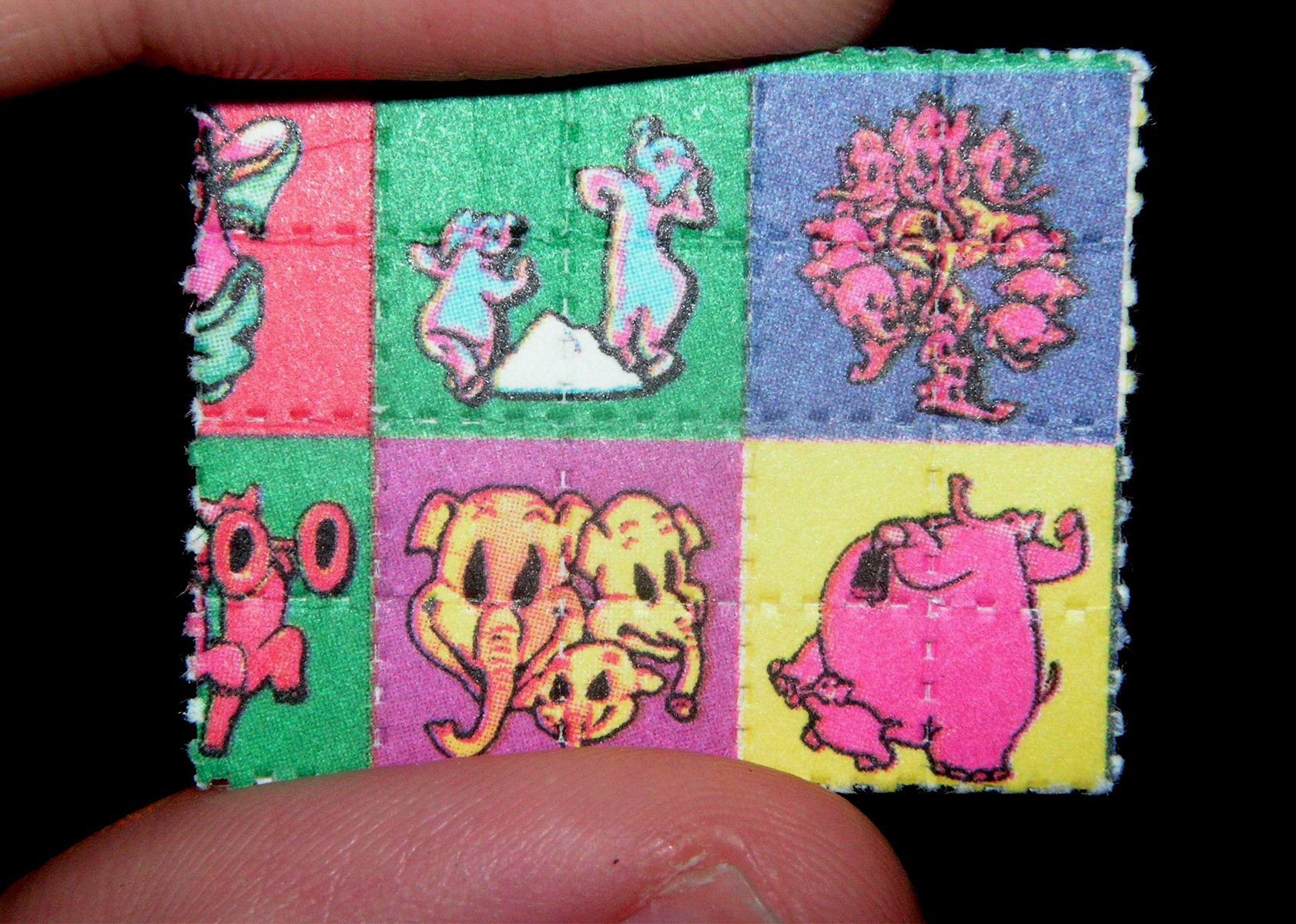
The researchers, many of them from the University of North Carolina, first began by examining the physical and chemical structure of the drug. Using crystallography imaging, the team directly examined how the molecules of LSD fit into serotonin receptors in the brain; when LSD attaches to these receptors the hallucinogenic or trippy effects are created. In the brain there is what the researchers referred to as a “side pocket” of these receptors which when the drug reaches this area, as the article states: “it does so at an angle that basically doesn’t allow it to get out afterwards. The receptor’s protein folds over the LSD molecule, trapping it even more.” That’s right. Your brain literally traps LSD. Even at lower doses, the effects of the substance are just as strong because of this entrapment. So if your trip becomes awe inspiring or absolutely mind bending, you have the structure of your brain and the drug itself to thank.
 One of the study’s lead authors, Bryan Roth, is excited about the new research and what it could mean for other drugs. Drugs that are utilized in the treatment process could be constructed in similar molecular structure as LSD, implementing strong effects at low doses. This would lower the quantity needed while keeping the effects at a high level. Thanks to this research, there is conclusive evidence that LSD is not only a substance with unique effects but a unique structure. Researchers are hopeful that this unique structure can be crafted with other beneficial drugs. We’ll have to wait and see.