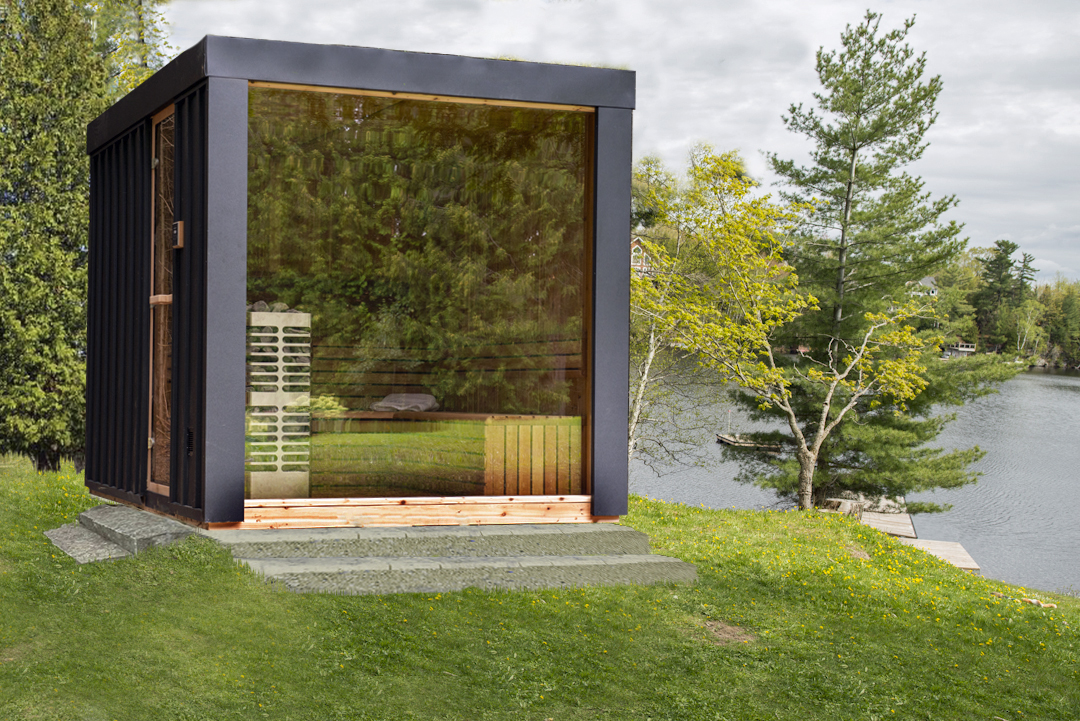
Yes — and if you live somewhere with real seasons, an outdoor sauna is actually one of the more forgiving structures you can put in your yard, as long as it’s built the right way. The question we hear most often isn’t really “can I,” it’s “will it hold up.” People picture snow piling up, rain finding its way in, and years of sun and wind slowly wearing the thing down.
Having built and sold saunas that have sat through Southern Ontario winters, summers, and everything in between, I can tell you the honest answer: durability isn’t the hard part. It’s just a matter of using the right materials and building it correctly from the ground up.
The Real Concern People Have
When someone asks us about building outdoors, weather durability is almost always the underlying worry, even if they phrase it differently. They want to know if the wood will rot, if snow will damage the roof, if the door will let in moisture, or if the whole thing will need constant maintenance to survive a Canadian winter.
It’s a fair question. But it also tends to be more solvable than people expect, because sauna wood and sauna construction have been dealing with heat, moisture, and temperature swings for a very long time. The materials are already suited for exactly this kind of stress.
How We Build for Weather Durability
There are two main approaches we use, depending on the style of sauna, and both are built with Canadian winters in mind.
Traditional All-Cedar Builds
Our traditional saunas use 1.5-inch thick cedar boards, and that thickness matters more than people realize. Cedar is naturally insulating on its own, so at that thickness, the wood itself does the job of holding heat during a session without needing added insulation layers.
Some people assume a thicker wall automatically means better performance, but for how these saunas are actually used, it isn’t necessary. A sauna session typically runs one to two hours, and 1.5-inch cedar retains heat well over that window. You’re not trying to hold a constant temperature for days at a time, so the insulation only needs to do its job for the length of a session, and solid cedar does that reliably.
Modern Insulated Builds
Our more modern sauna models take a different construction approach. These have insulation built into the walls, lined with cedar on the interior for that classic look and feel, with a steel exterior covering the insulation layer. That steel shell is what keeps snow and water from working their way into the structure over time, which is one of the bigger long-term durability concerns with any outdoor build.
Roofing: Why EPDM Matters
On our modern, flatter-roofed saunas, we use EPDM roofing — Ethylene Propylene Diene Monomer, a synthetic rubber material that’s widely used for flat roofing, weather-stripping, and even pond liners because of how durable and weather-resistant it is. It’s the same category of material that’s trusted to hold water back in demanding outdoor applications, which makes it a natural fit for a flat-roof structure that needs to handle rain, snow, and sun exposure year-round.
Build Details That Actually Determine Durability
Materials get most of the attention, but how a sauna is built and installed matters just as much, sometimes more.
Foundation and Drainage
The foundation needs to allow water to run off rather than pool underneath or around the structure. Standing water near the base of any outdoor structure is a slow but steady path to problems, so proper drainage at the foundation level is one of the first things we address in any build.
Roof Pitch
Our roofs are typically built with a bit of a slope, specifically so water doesn’t sit on top of the sauna. Combined with the EPDM roofing, this keeps moisture moving off the structure instead of collecting and eventually finding a way in.
Ventilation
Every sauna we install comes with vent kits. Proper ventilation isn’t just about air quality during a session — it also helps manage moisture inside the structure over time, which matters for long-term wood condition. I always tell customers to leave the vents open once a session is done, so the moisture built up inside has a way to escape rather than sitting in the wood.
Door Seals
The door setup varies depending on the style. Full glass doors come with their own seals built in. Wood-framed doors with a glass window seal directly against the wood frame. It’s normal to notice a bit of steam escaping around the door seal during a session — that’s just heat and moisture finding the path of least resistance, not a sign of a poor seal.
The Pad Underneath
If there’s one piece of advice I give every customer before they even get to material or design choices, it’s this: get a good pad underneath the sauna. A solid, level, well-draining base sets up everything else to perform the way it’s supposed to. Skipping this step, or cutting corners on it, is one of the few things that can undermine an otherwise well-built sauna.
Proof: These Builds Actually Hold Up
We have saunas out in Southern Ontario that have been through the seasons for years now. Sun, snow, rain, wind — all of it — and they’re still holding up well. That’s not a marketing line, it’s just what happens when solid cedar, proper insulation choices, EPDM roofing, and correct drainage and ventilation all come together in a single build. There’s nothing exotic about it. It’s just building it right the first time.
The Concern People Get Wrong: Power, Not Weather
Here’s where I’ll offer an opinion that goes against what a lot of people assume. Weather durability is rarely the thing that actually trips people up once they own a sauna. The concern I hear more often, once someone is seriously considering a purchase, is about power consumption for heating.
People tend to compare an outdoor sauna to a hot tub in their head, and that comparison leads them to overestimate the cost. A hot tub is running and heating almost constantly to maintain temperature. An outdoor sauna doesn’t work that way. It’s only on when you’re actually using it. Once a session is done, the heater goes off, and the sauna isn’t drawing power in the background the rest of the time.
Combine that with a build that retains heat well for the length of a session — whether that’s 1.5-inch solid cedar or an insulated, steel-clad structure — and you end up with a sauna that’s efficient by design, not by accident. You’re heating it when you need it, holding that heat for the session, and then it’s off. That’s a very different energy picture than people usually walk in expecting.
The Bottom Line
Yes, you can absolutely build a sauna outdoors, and in a climate like Ontario’s, it can hold up beautifully for years if it’s built with the right materials and the right details: solid cedar or properly insulated steel-clad construction, EPDM roofing on flat-roof models, a sloped roof, good drainage at the foundation, proper ventilation, quality door seals, and a solid pad underneath. Get those pieces right, and weather durability stops being something to worry about.
The bigger question isn’t whether it will survive the seasons. It’s making sure it’s built correctly from the start, so you never have to think about it again.