BY: AYA TSINTZIRAS
At the beginning of November, I boarded two bumpy planes to fly to Charleston, South Carolina. I wasn’t going for the fried chicken or tomato pie or to visit any plantations. I wanted to attend YALLFEST, a young adult book festival, and I was looking forward to attending one panel in particular, called “My Name is Writer, and I am a Basket Case.”
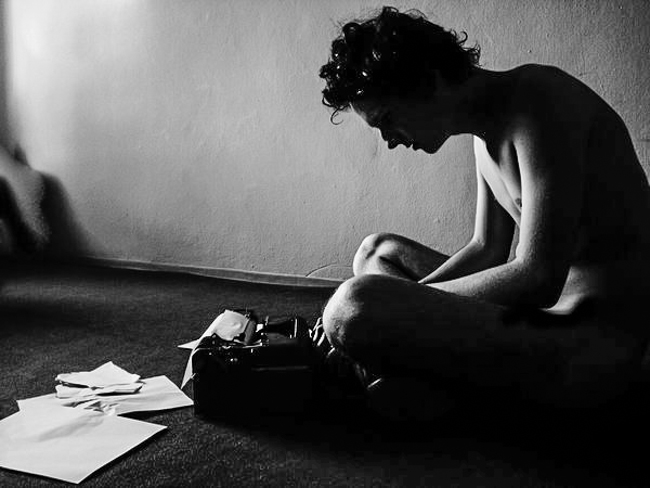
Writers are no strangers to self-doubt, self-criticism, anxiety, or depression. And all writers experience this, even if there is something called “the Sylvia Plath effect” after a study found that female poets are more likely to suffer from mental illness than writers of non-fiction, fiction and playwrights. But since I’m a passionate reader and writer of YA fiction, examining why there is so much mental illness within this community is what interests me. It seems that some form of mental illness, at some time in our lives, is inevitable for writers. Or at least we’re more aware of the potential and existence of suffering from depression and/or anxiety.
YALLFEST is a special event: on the first weekend of every November for the past four years, fans and authors gather in this southern city full of southern charm and line up on the palm tree-lined King Street for book signings and fascinating panel discussions. The Basket Case one was a pretty surreal experience: sitting in a packed room and looking at a row of several extremely successful YA authors who all shared their stories and talked about the mental health of writers. I want to celebrate the fact that we can talk so candidly about our problems, and I deeply respect those writers for coming forward. But the panel left me wondering if the nature of the work is a kind of pathway leading towards depression. I’ve always hated the popular belief that writing is a solitary activity that makes you feel lonely, because I don’t feel lonely when I write. I enjoy listening to music, sometimes themed to the scene I’m working on, sometimes just the same stuff I listen to or repeat all the time (usually Taylor Swift – guilty), and I enjoy the satisfaction of getting the words down.
 But publishing is a slow process, and it doesn’t get easier when you get a book deal or find success. There are edits, promotion, remembering to update your blog. And then there’s something called Twitter that makes it so much easier to compare yourself to others. It’s hard not to feel down when you see someone get a six-figure deal when you’re still struggling with your first draft, or the second, or the third (it takes a lot of drafts). So if you’re a writer, staring at your Word doc with that blinking cursor, and you’re comparing yourself to others who seem to be further along in their careers, it’s impossible not to feel some self-doubt. I’m not saying that the act of writing and even writing towards publication will definitely lead to mental illness. Of course not. Depression is a serious disease. But mental health involves how much you worry about things that you can’t change, how anxious you feel, how good you feel about yourself and your work.
Read also: Why do Artists Have to be Poor and Fucked Up?
As Sarah Fine, one of the panellists, said, artists are more “willing” to discuss mental health issues. There was definitely a dialogue around the issue after the tragic suicide of Robin Williams last August, including a beautiful Globe and Mail piece by author, poet and playwright Michael Redhill called “Thoughts on depression from an artistic mind.” Among his advice: “The only cure is exercise and work.” It makes sense – work leads to a feeling of accomplishment, makes you feel useful, and provides structure. It’s just getting yourself into the mind-set of believing in your self-worth enough to do your creative work that is the battle. Another panellist, Libba Bray, said “Fiction is so cathartic” and it’s true, both for the reader and the writer. If you’re going through something, then the act of writing will only make you feel at least a little better. And the same is true of reading a book. Stories give us hope, and so it’s a kind of cycle, back and forth, between the need to keep telling important and emotional stories and the desire to keep reading them.
 One of my favourite YA authors, Sara Zarr, said that at 44, she is finally able to deal with her emotions: “You just become this free person,” she said during the panel discussion. That stuck with me. Because there is no cure for depression, there’s only the day-to-day management, and the same can be true of the fact that there’s no cure for worrying that what you’re writing isn’t good enough. All you can do is keep getting the words down. And the hard work doesn’t end. As the event moderator Margaret Stohl said, “It is literally impossible to suck at everything. Lord knows I have tried. I promise you it gets a little better.” If you’re a writer, you probably don’t actually suck at writing. Even if it feels like that some days. So if it feels inevitable to get into that cycle of self-doubt and depression and anxious thoughts about you and your work, know that the cycle will reverse itself. The only real cure is to keep going.