BY: DANIEL KORN
Even before the current World Cup 2022 disaster, FIFA had come under fire for several indiscretions. As covered in a 2014 segment on Last Week Tonight with John Oliver, the burden of the World Cup forces countries to build huge, expensive stadiums that often go unused afterwards. The money made is from tourism—often insufficient for so much as breaking even on the stadium construction— FIFA takes all of the money from ticket, food and merchandise sales. To make matters even more despicable, the organization forces countries to waive taxes on the hundreds of millions of dollars they make every World Cup, yet they are somehow still able to be technically designated as a non-profit organization.
On hosting countries, FIFA will also impose their own laws in regards to public safety and criminal prosecution to satiate their sponsors, as they did in 2012 when they made Brazil legalize beer sales in the 2014 stadium—which had previously been made illegal due to the amount of deaths caused in the country by alcohol-fueled violence at sporting events. Finally, there have been several accusations of corruption and bribery within the organization, supported by the recent arrests by the FBI of nine FIFA officials and five corporate executives on 47 counts of racketeering, money laundering, and the like.
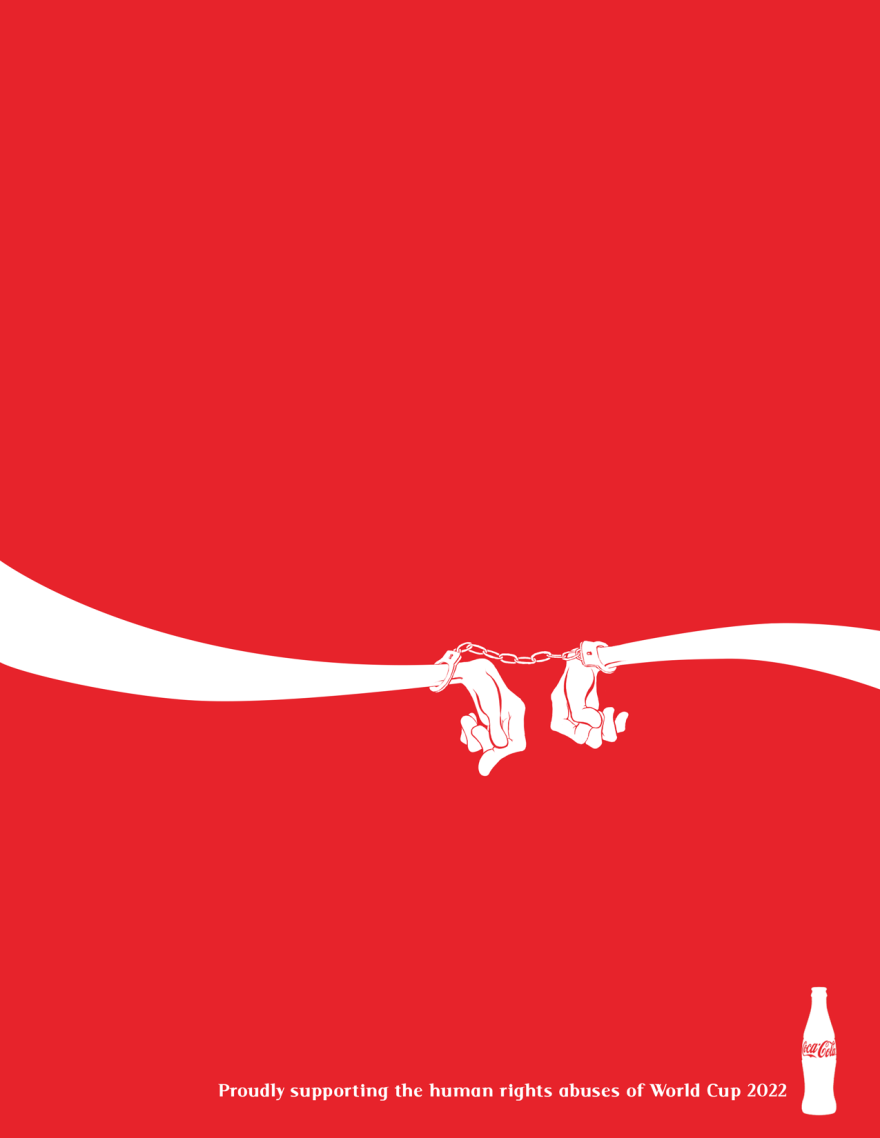 Photo source
This is before we get to the current situation in Qatar, where the building of the 2022 World Cup stadium has resulted in awful, life-threatening working conditions. At least one migrant worker from Nepal dies every day during construction, and the International Trade Union Confederation estimates that at least 4,000 workers will be killed by the time the stadium is complete. Meanwhile, allegations from workers describe being withheld their promised high-paying salaries, living in squalid “labour camps”, and having their passports and IDs confiscated, trapping them in the country as illegal aliens.
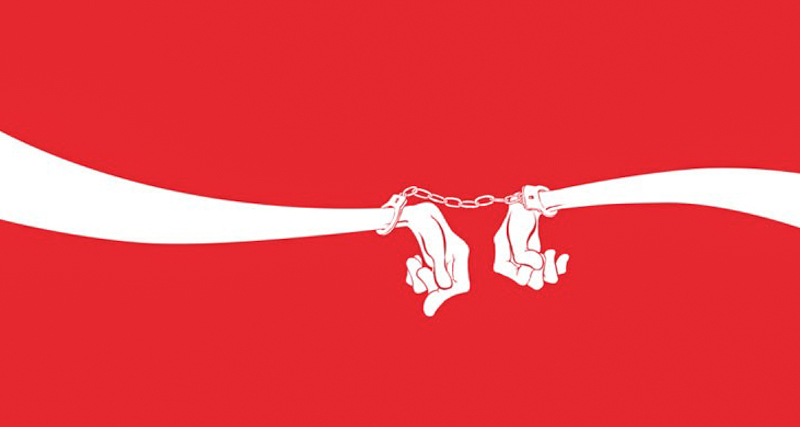
As a form of protest against the corporations who sponsor the World Cup—including McDonalds, Coca-Cola, VISA, Sony, Adidas, and Hyundai—artists from around the internet have created “anti-logos”, modifying the companies’ signature brand emblems to reflect the unacceptable results of their corporate backing.
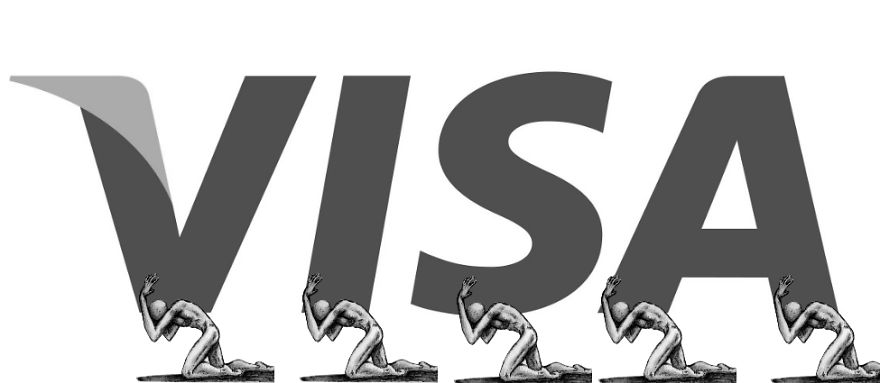 Photo source
 Photo source
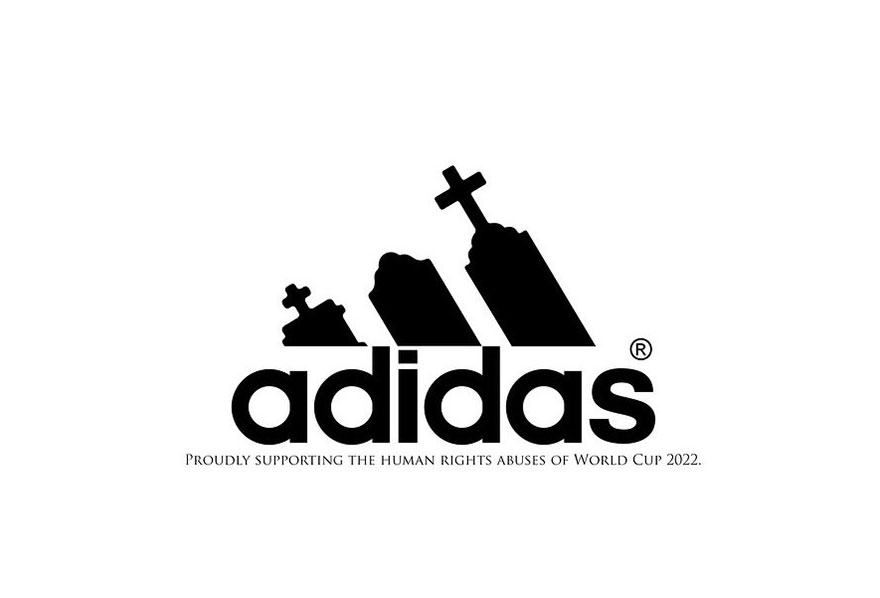 Photo source
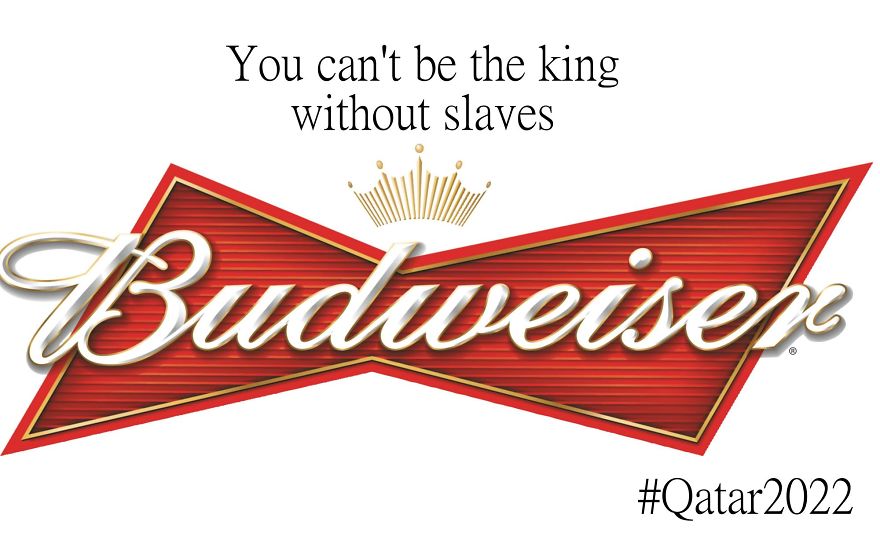 Photo source
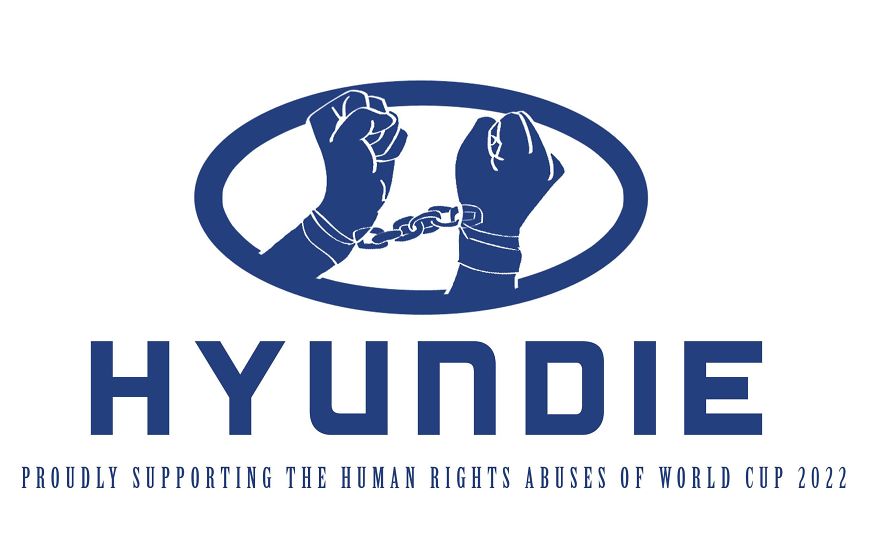 Photo source
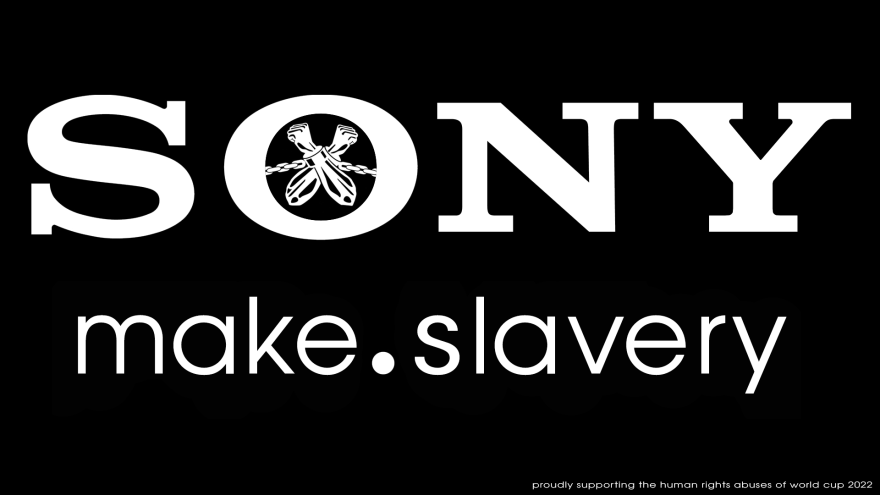 Photo source
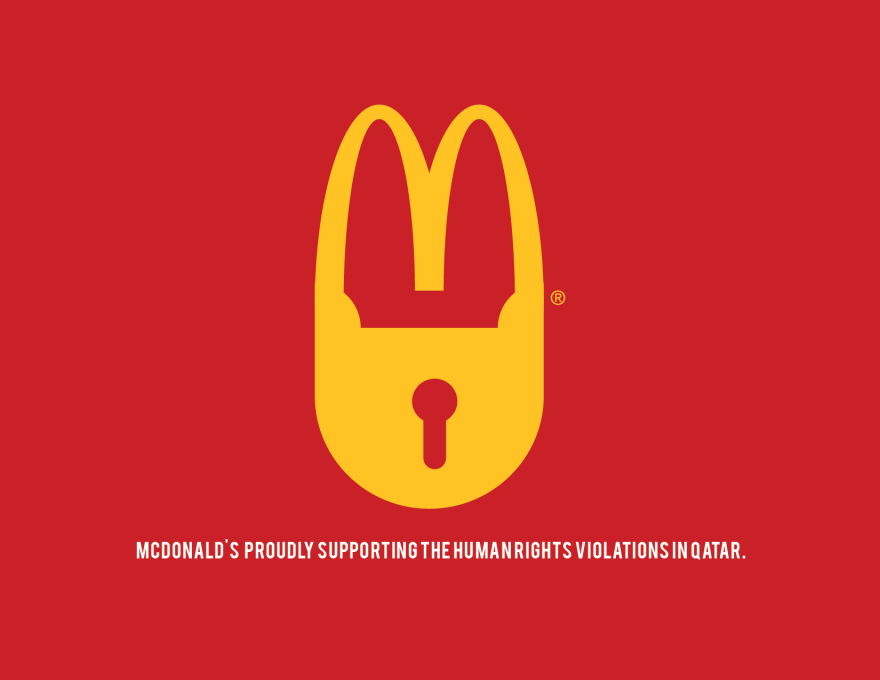 Photo source

Photo source
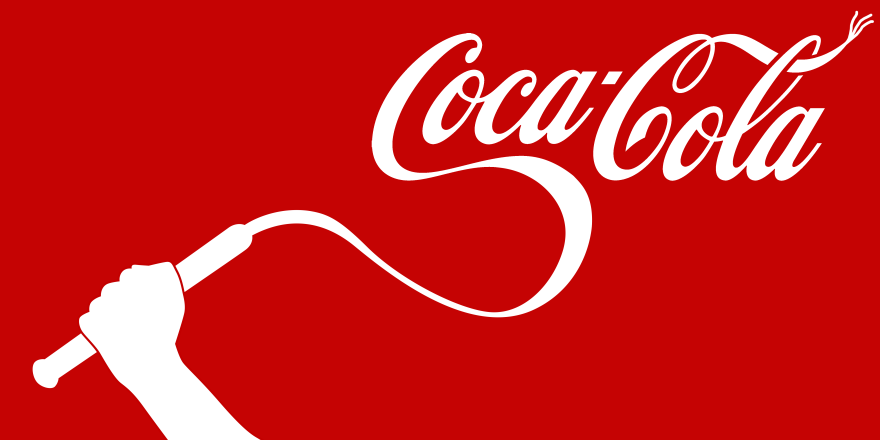

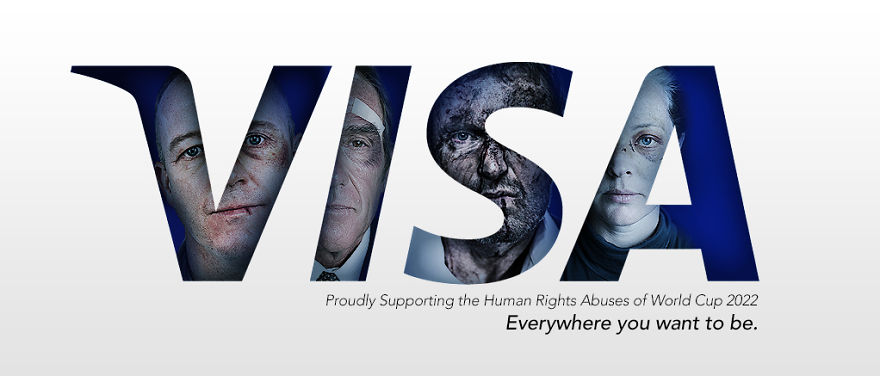
Photo source