BY: PHILIPPE DE JOCAS
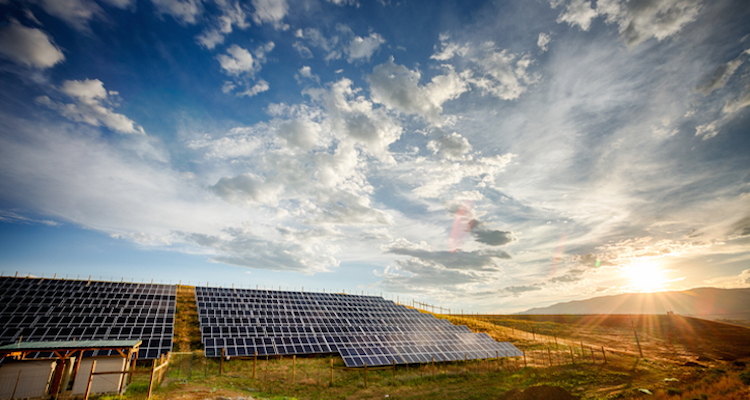
Little Orphan Annie famously opined that the sun would come out tomorrow – and now the age of the solar panel has finally dawned. In the coming years, expect to see more photovoltaic panel farms, more solar panels affixed to buildings – and less fossil fuels.
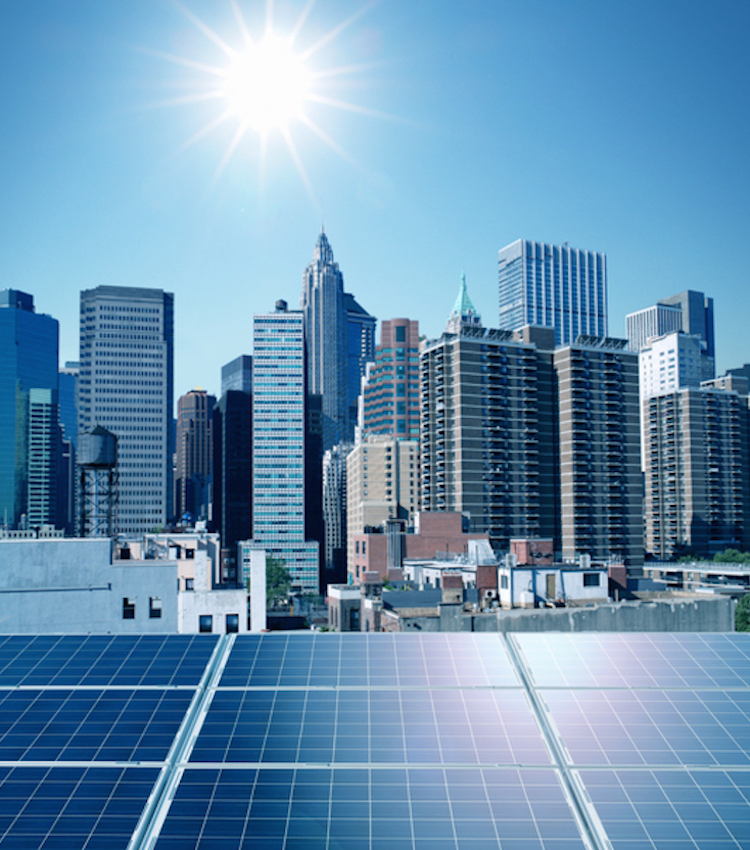 It’s no secret that, historically, solar power has received a bit of a rough deal. Even President-elect Donald Trump took time out on the second debate to criticize the perceived benefits of transitioning from coal and oil to the “solar standard.” Critics of solar energy have long pointed out that the only way to construct a solar energy plant involved employing fleets of bulldozers, cranes, and trucks – heavy-duty machines running off of oil and gasoline. While the energy that these solar farms generated helped to wean us off our reliance on fossil fuels, building solar farms racked up a fossil “debt” of wattage that solar energy plants would have to “pay off” before they could truly overtake the oil and gasoline industry.
As of December 2016, that time has come. A Netherlands-based research team successfully calculated that the net output of clean-energy solar farms has cancelled out the dirty energy used to construct and implement them. After more than 40 years, the time and investment involved in setting up solar farms have finally paid off.
 Although French physicist Alexandre Becquerel discovered the basic principles behind photovoltaic energy as early as 1839, serious solar research only got going in the 1950s Space Race. NASA contractor Bell Labs designed the forerunner of modern solar panels for use in orbital operations where the sun always shone.
The first commercial solar cells debuted in 1959, converting a paltry 10 percent of its solar intake into usable electricity. Considered clunky and largely inefficient, scientists and economists regarded terrestrial solar cells as novelties. Solar energy languished until the 1970s, when the American Energy Crisis prompted renewed public interest into developing alternative fuels. The trend took off, stuck, and kick-started the modern solar movement.
In short order, Jimmy Carter installed the first solar panels on the White House, Colorado’s government launched the first Solar Energy Research Institute, and by the turn of the decade, the world’s solar output cracked 500 kilowatts.
In 1975, less than 10,000 solar panels existed. As of today, we’re looking at more than a billion solar cells all across the world, and more are on the way. For every doubling in solar output wattage, the energy used to produce the solar panels decreased by about 12 to 13 percent. Every doubling in solar capacity has also seen a drop in both manufacturing and implementation; while one watt-peak unit of solar energy would cost 80 dollars in 1976, the same technology would cost a whopping 66 cents in today’s economy. Researchers estimate that by New Year’s Eve of 2016, solar energy will exceed 300 billion watts of power – more than 1.5% of the world’s collective energy output.
 While the Dutch research team has admitted that their model skews conservatively, they maintain that the metaphorical “debt” has been paid off. From this point onward, global solar energy will have a net positive impact on the world energy market. With every new technological advancement or economic innovation, solar power will have a clear impact on the global energy market – and that’s something to be feeling sunny about.