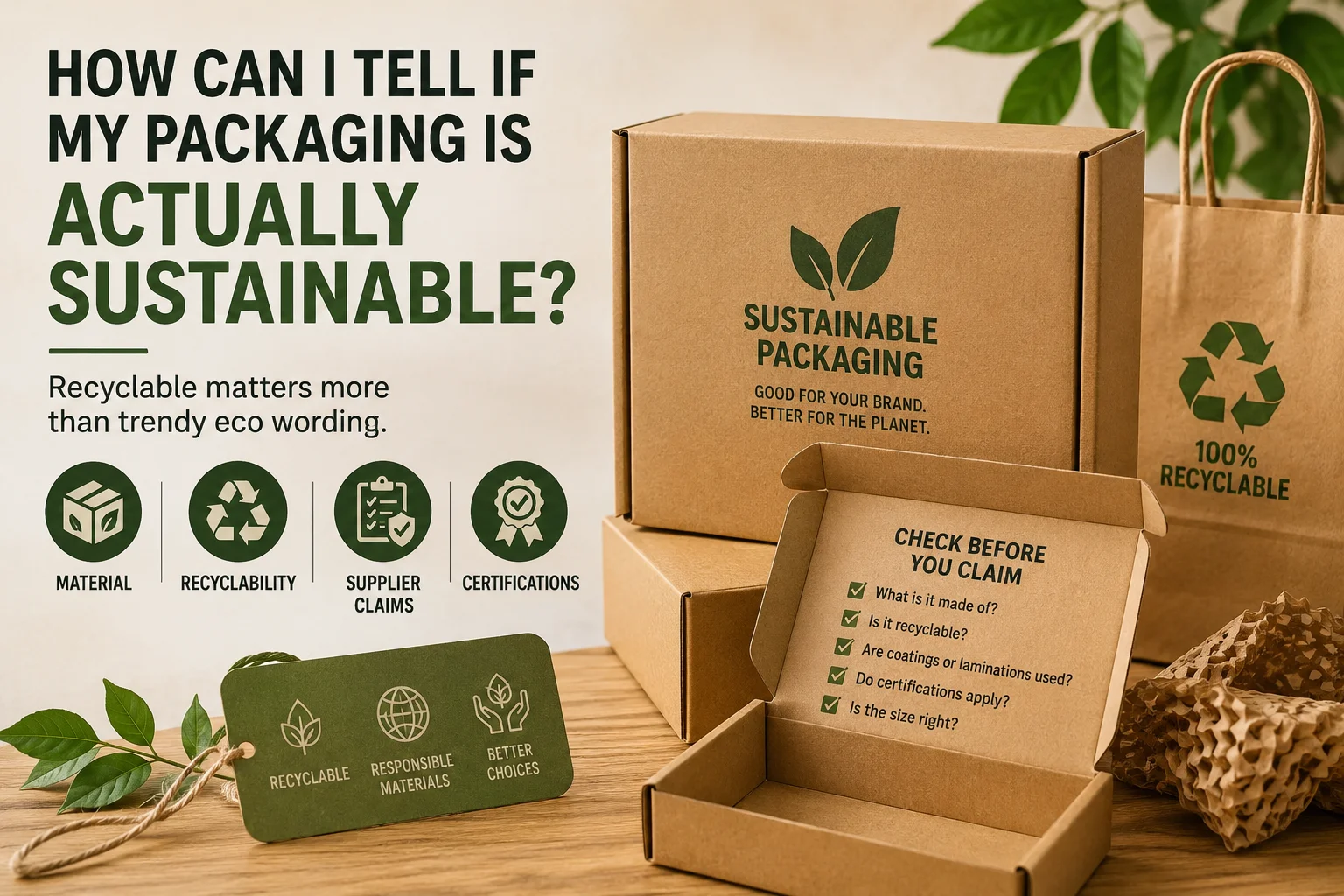
Sustainable packaging is not proven by a brown kraft look, a leaf icon or the words “eco-friendly” on a supplier page. The real test is much more practical: what material is used, whether the packaging is recyclable, whether supplier claims are backed up and whether certifications actually match the product.
That is where many brands get confused. A box can look natural and still be difficult to recycle. A mailer can be called eco-friendly and still have a plastic coating. A supplier can use green language without showing what the packaging is made from or how it should be disposed of.
My strongest opinion is simple: recyclable matters more than trendy eco wording.
If the packaging cannot be recycled easily, or if the material story is unclear, the sustainability claim is weak. Good sustainable packaging should be easy to understand, practical to use and honest about what it can and cannot do.
Start With The Material, Not The Marketing
The first thing I look at is the material. Before I trust any sustainability claim, I want to know what the packaging is actually made from.
Paperboard, kraft board, corrugated board, recycled paper and certain recyclable stocks can all support a stronger sustainability direction. But the base material alone does not tell the full story. You also have to ask what has been added to it.
A plain-looking kraft mailer may seem sustainable at first. But if it has a plastic coating, heavy lamination or mixed material layers that are hard to separate, the recycling story changes.
That is why the material check should include questions like:
- Is the packaging made from paper, plastic, mixed material or a coated board?
- Is the material recyclable in normal recycling streams?
- Does the supplier clearly state the stock type?
- Is there lamination, film, coating or metallic finish added?
- Are inserts, windows, handles or seals made from a different material?
A sustainable packaging decision starts with the structure and material, not the sales wording.
Check If The Packaging Is Actually Recyclable
Recyclability is one of the most important signs of sustainable packaging. It does not matter how natural a package looks if the end user cannot recycle it easily.
For example, kraft paperboard is often a better starting point than plastic-heavy packaging. Recyclable board can also be a strong choice when the packaging needs cleaner print results, stronger branding or a more polished retail look.
But recyclability depends on the full construction. A box made from recyclable board can become harder to recycle if it includes plastic lamination, non-removable windows, heavy foil coverage or glued-in mixed-material parts.
This is the question I would ask before approving any sustainability claim:
Can a normal customer understand how to recycle this packaging without needing special instructions?
If the answer is no, the design may need to be simplified.
Watch Out For Plastic Coating And Lamination
One of the biggest mistakes I see is ignoring coatings and lamination. Many brands look at the outside of the box and assume it is sustainable because the board looks brown, recycled or natural.
But coatings can change everything.
I once worked with a fashion brand that was using mailer boxes they believed were eco-friendly. On the surface, the boxes looked the part. They had that clean kraft-style appearance and were being positioned as a greener packaging choice.
After inspecting them more closely, we found plastic coating on the boxes.
That changed the whole conversation. The brand was trying to make a sustainability claim, but the packaging did not fully support the message. The problem was not that the brand had bad intentions. The problem was that they trusted the surface-level claim without checking the full material setup.
This is why I always tell brands to ask about coatings, not just board type.
Do Not Trust Vague Supplier Claims
Supplier claims should be specific. If a supplier says packaging is “green,” “eco,” “earth-friendly” or “sustainable” but does not explain why, that claim needs more checking.
Strong claims usually come with details. Weak claims rely on trendy language.
A good supplier should be able to explain:
- What material the packaging is made from
- Whether the board is recyclable
- Whether recycled content is used
- Whether any coating or lamination is added
- Whether certifications apply to that exact material
- Whether the packaging needs special disposal instructions
The phrase “eco-friendly packaging” is not enough by itself. It should be supported by material details and a realistic disposal path.
This matters because customers are becoming more aware of greenwashing. They can tell when packaging looks sustainable only for marketing. A brand that wants trust should be clear, careful and honest.
Certifications Matter, But They Need To Match The Packaging
Certifications can help support a sustainability claim, but they should not be used as decoration. They need to apply to the actual material or production process being discussed.
A certification logo on a website does not automatically mean every box, bag or insert uses certified material. The details matter.
Before relying on a certification, ask:
- What certification is being claimed?
- Does it apply to this exact packaging material?
- Is it connected to the paper source, recycled content or manufacturing process?
- Can the supplier provide documentation if needed?
- Is the certification relevant to the sustainability claim being made?
Certifications are helpful when they are specific. They become risky when they are used as broad proof without context.
Right-Sizing Is Part Of Sustainability
Sustainable packaging is not only about material. Size matters too.
Oversized packaging is one of the most common mistakes brands make. A box that is too large uses more board than necessary, takes up more shipping space and often needs extra void fill to stop the product from moving.
That means more material, more waste and often higher shipping cost.
Right-sized packaging is more sustainable because it reduces unnecessary material from the start. It also improves the customer experience because the product feels intentionally packed instead of thrown into a box that is too big.
When reviewing packaging size, ask:
- Does the product fit closely without being crushed?
- Is there too much empty space inside the box?
- Can the box size be reduced without hurting protection?
- Is extra filler being used because the box is too large?
- Would a custom insert or divider reduce movement more efficiently?
A smaller, better-fitted package often does more for sustainability than switching to a trendy material but keeping the same oversized structure.
Kraft And Recyclable Board Are Often A Practical First Step
When a customer wants more sustainable packaging, I usually recommend starting with kraft or recyclable board.
That is not because kraft automatically solves everything. It is because kraft and recyclable paper-based materials often create a clearer and simpler path than packaging built around mixed materials, plastic-heavy finishes or overly complex coatings.
For many ecommerce, retail, apparel, food-adjacent and subscription packaging projects, a paper-first structure is a practical move. It keeps the packaging familiar, brandable and easier to explain to customers.
For carry packaging, recycled paper bags can be a strong option when the goal is to reduce plastic-heavy bag use while still keeping print space and daily usability.
The key is balance. The packaging still needs to protect the product, fit the brand and survive handling. Sustainability should not create a weak box or a poor customer experience. The right goal is not just “make it look eco.” The goal is to make it work better with less waste.
Simple Packaging Often Beats Complicated Packaging
The more complicated a package becomes, the more carefully it needs to be reviewed.
Extra windows, plastic linings, foil layers, soft-touch lamination, mixed inserts and heavy coatings can all affect recyclability. Some of these finishes may be right for premium retail packaging, but they should not be added automatically if sustainability is a priority.
A simpler box can often support a cleaner sustainability message.
That might mean:
- Using recyclable board instead of plastic-heavy material
- Choosing kraft stock for a natural look
- Removing unnecessary lamination
- Reducing oversized dimensions
- Using paperboard inserts instead of mixed-material inserts
- Keeping print coverage practical
- Avoiding finishes that conflict with the recycling goal
Sustainable packaging usually improves when brands stop asking, “What can we add?” and start asking, “What can we remove without hurting the product or the brand?”
The Zero-Waste Lesson Brands Can Learn
The idea behind a zero-waste grocery store with no packaging, plastic or big-name brands is extreme compared with normal ecommerce or retail packaging, but the lesson is useful.
Waste reduction starts by questioning what packaging is truly needed.
Most brands cannot remove packaging completely. Products still need protection, shelf appeal, shipping strength, labeling and a clean handoff experience. But the zero-waste mindset can still help brands make better decisions.
Instead of asking, “How do we make this package look sustainable?” ask:
- Can we use less material?
- Can we remove unnecessary plastic?
- Can we make the package easier to recycle?
- Can we right-size the structure?
- Can we avoid finishes that add waste without adding real value?
- Can the customer understand what to do with the packaging after use?
That mindset leads to better packaging than simply choosing whatever has the greenest-looking design.
How To Review Your Current Packaging
If you already have packaging and want to know whether it is actually sustainable, start with a simple audit.
Look At The Base Material
Identify the main material first. Is it kraft board, white paperboard, corrugated board, rigid board, plastic, mylar, laminated paper or a mixed-material structure?
If the supplier cannot explain the base material clearly, that is a warning sign.
Check For Coatings And Lamination
Look beyond the surface. Ask whether the packaging has plastic coating, aqueous coating, lamination, metallic film or any barrier layer.
Coatings are sometimes needed for durability or product protection, but they should be understood before sustainability claims are made.
Review The Size
Put the product inside the package and look at the empty space. If the box needs a lot of filler, or if the product moves too much, the size may not be efficient.
Right-sizing can reduce material and improve presentation at the same time.
Ask For Certification Details
If a supplier mentions certification, ask what it applies to. The paper source, recycled content, production process and finished packaging may not all be covered by the same claim.
Do not rely on a logo without context.
Think Like The End Customer
Imagine the customer has finished using the product. What happens next?
Can they recycle the packaging easily? Do they need to separate materials? Is there a plastic window, lining or insert that makes disposal confusing?
The easier the answer, the stronger the sustainability message.
Signs Your Packaging Claim May Be Weak
A sustainability claim may need more review if:
- The supplier only uses vague words like “eco” or “green”
- The packaging has plastic coating but is marketed as paper-based
- The box is much larger than the product
- The material is not clearly identified
- The packaging uses mixed materials that are hard to separate
- The claim depends only on the color or natural look of the packaging
- Certifications are mentioned but not connected to the exact material
- The customer would not know how to recycle it
These signs do not always mean the packaging is bad. They mean the claim needs to be checked before it becomes part of your brand messaging.
Sustainable Packaging Should Still Protect The Product
A sustainable package that fails during shipping is not sustainable in practice. If the product arrives damaged, the replacement, reshipping and wasted material can create more harm than the original packaging choice.
That is why packaging has to balance sustainability with performance.
A good structure should:
- Protect the product during handling
- Fit the product properly
- Avoid unnecessary material
- Support clear recycling or disposal
- Match the brand’s quality level
- Use finishes and coatings only when they serve a real purpose
Sustainability should not be treated as a separate feature. It should be built into the material, size, structure and customer experience.
My Practical Rule For Brands
If you want to know whether your packaging is actually sustainable, do not start with the claim. Start with the proof.
Ask what the material is. Ask whether it is recyclable. Ask what coatings have been added. Ask whether certifications apply to the exact material. Check if the box is oversized. Look at whether the customer can dispose of it easily.
A package does not need to be perfect to be better. But it does need to be honest.
The best sustainable packaging decisions are usually simple: use the right material, avoid unnecessary coatings, right-size the structure and make recyclability clear.
That is why recyclable matters more than trendy eco wording.
Need Help Reviewing Your Packaging?
If you are unsure whether your current packaging supports your sustainability message, Custom Packly can help you review the material, structure, size, coating choices and print approach before production.
Share your product size, packaging goals, artwork needs and any sustainability claims you want to make. We can help you choose a practical packaging direction that protects the product, supports your brand and avoids weak “eco-friendly” claims that do not hold up.