If you design or build commercial and residential spaces for a living, you’ve likely looked at a beautifully finished project and thought, “We need to get this photographed.” But when you start looking for a photographer, you quickly run into a massive divergence in pricing, process, and philosophy.
Many professionals call themselves architectural photographers simply because they take pictures of buildings. However, the difference between real estate and architectural photography is the difference between high-volume and craft. Choosing the wrong one can actively dilute your brand.
Documenting a Layout vs. Capturing Design Intent
Real estate photography has a single, urgent goal: to help sell or lease a space quickly. The photos are transactional, using ultra-wide lenses to make rooms look massive and heavy processing to open every shadow so a prospective buyer can see the basic layout.
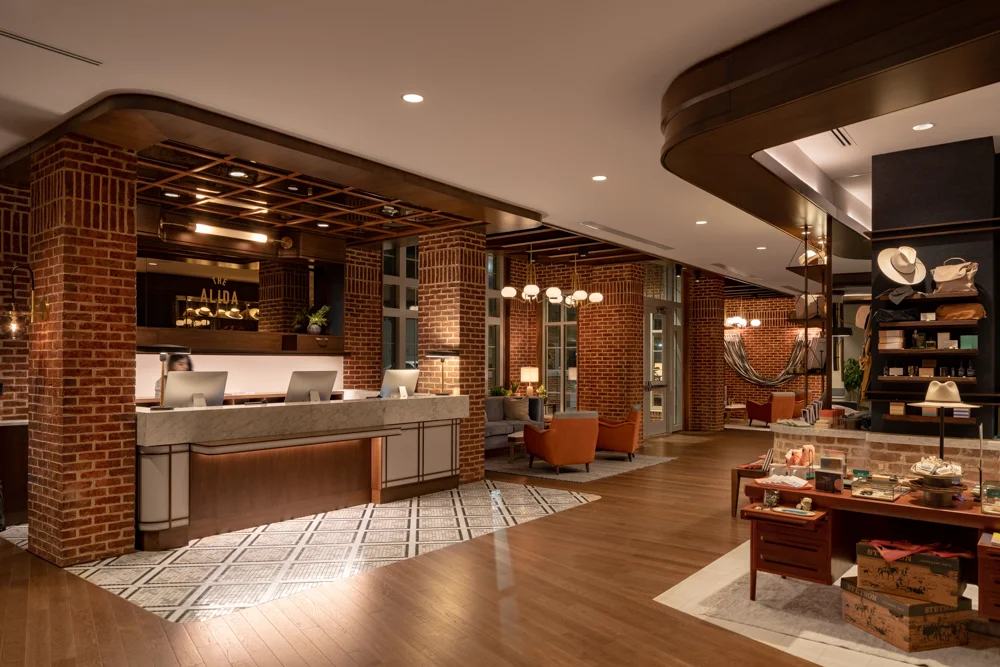
Architectural photography is different. It’s not so much about showing what a building looks like; it’s about conveying what it feels like to actually be in the space. An experienced architectural photographer doesn’t look through the lens like a standard vendor. When they frame a shot, they are thinking about the design intent. Rather than blasting a room with artificial light to erase contrast, architectural photographers embrace darker shadows and directional light to create depth, mood, and texture.
Speed vs. Meticulous Craftsmanship
A real estate photographer might shoot two or three houses in a single day, or an apartment complex in a couple of hours, producing anywhere from 50 to 300 images per project.
In contrast, an architectural shoot is a meticulous, dawn-to-dusk creative process. Architectural photographers typically produce just 12 to 20 images in an entire day – perhaps 12 meticulously staged frames and 3 to 8 quicker detail or vignette images. It is completely normal to spend an hour or more producing a single image, perfecting the composition, arranging furniture, and positioning specialized lighting.
Automated Processing vs. Precision Editing
While real estate photos are usually edited with automated software and batch-processed for a 24-hour turnaround, the editing process for architectural photography can often take twice as long as the actual time spent on-site.
Architectural image editors can spend an hour or more editing a single image. Every final frame is a composite of multiple exposures meticulously blended in Photoshop to correct color, manage complex light sources, and problem-solve reflections. In addition, post-production typically includes precision object removal—cloning out distracting elements like exit signs, fire extinguishers, smoke detectors, and wall receptacles so that the purity of the design shines through.
An On-Site Creative Collaboration
Real estate photographers almost always work entirely solo. Architectural photography, however, is a collaborative partnership. The architect, interior designer, or marketing contact is often on-site during a shoot so they can collaborate on the images in real time.
To make things seamless, architectural photographers almost always shoot tethered to a computer or wirelessly to a tablet. Clients can hold the tablet to view a Live View video feed. Together, the photographer and team talk through composition and furniture arrangement for each shot, watching exactly how moving a chair three inches or adjusting a light fixture impacts what the camera sees.
Disposable Assets vs. Long-Term Brand Investments
Perhaps the biggest difference lies in the lifespan of the final images, which dictates how they are priced and licensed. Real estate photos are temporary marketing assets. They live on listing sites for a few weeks or months, and once the property is sold or leased, their job is done.
Architectural photography focuses on creating permanent brand assets. These images live in portfolios, win design awards, land features in design press, and secure a designer’s or builder’s next dream commission.
The Ultimate Bottom Line
Real estate photography may be all you need for a short-term building sale or lease-up. For long-term marketing of your design or construction business, architectural photography is essential. Having high-quality project photos reflects your firm’s commitment to excellence, quality, and attention to detail. A cheap photograph that fails to capture your design intent is an expense. A high-end architectural image that elevates your brand is an investment that will pay dividends for years to come.
The author, Jason Buch, offers architectural photography in Atlanta and across the United States.
For inspiration and direction in your own personal photography, check out this post about embracing photography as a fulfilling hobby.