BY: LAURA ROJAS
The fight for GMO labeling should be understood just as widely as the pro-marijuana legalization movement. After all, seeing as you need food to survive, you might want to understand the limited choice that stocks grocery store shelves.
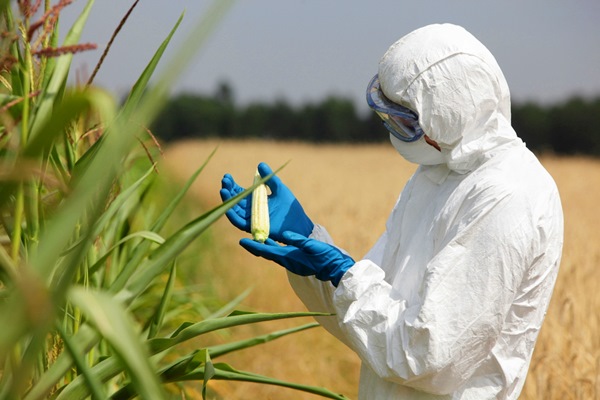
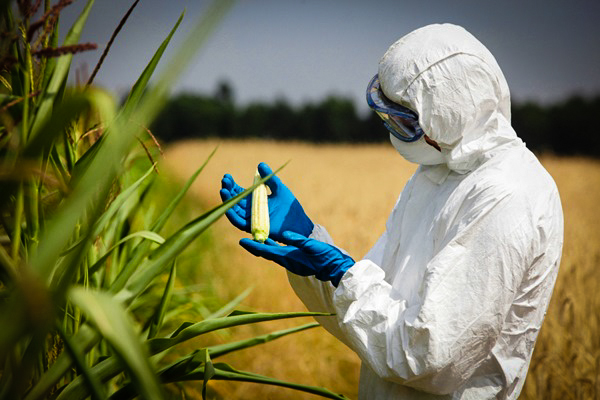
GMOs, or genetically modified organisms, are found in a grand majority of what we eat. In fact, GMOs are so widespread that 170 million acres of land in the United States is devoted specifically to their production. GMOs are created through biotechnology by splicing genes and merging DNA from different species in order to create a new organism containing a handful of desired qualities not native to its natural counterpart. The most commonly found genetically engineered foods currently are corn, soybeans, cotton, sugar beets, and canola oil, meaning GMOs taint the vast majority of processed foods as well- from cereal, to chicken nuggets. GM fruits and vegetables are common too, leaving organic produce as the only option out of the reach of modification.
First introduced as the answer to world hunger, GMOs were meant to produce a higher yield through their newfound resistance to herbicides and pesticides. However, different types of pests, both weeds and insects, have become increasingly resistant to these over time in the same way that the bacteria on our hands become resistant to antibacterial soap. So what do we do when that happens? We use stronger soap and wash our hands more often. Similarly, GM crops, once thought to be the end-all solution to toxic chemical spraying, has initiated a new resistance war which forces agricultural facilities to use stronger chemicals in increasing doses, making it extra harmful for us and the environment; not to mention an increasing cost for farmers who already pay for patents on GMO seeds thanks to the iron fist of Monsanto, the world’s largest agribusiness. Is it a surprise that Monsanto is also the producer of Roundup, the world’s most commonly used toxic herbicide?
 In case you’re not familiar with Monsanto, I’ll try to sum up their long line of crimes against humanity in a couple of paragraphs. Founded by John Francis Queeny as a chemical company in 1901, Monsanto has been considered “the most evil corporation on Earth”– and with good reason. The first product Monsanto marketed was saccharin, a chemical sold to Coca-Cola as an artificial sweetener, which was later banned in the ’70s after being thought to have a connection to instances of bladder cancer. It was reinstated as a food additive in 2001, although studies on its exact relation with disease in humans are still a bit shaky. Nonetheless, saccharin is still found in many sugar-free products.
Throughout its shady history, Monsanto has managed to sell PCBs (devastatingly toxic chemicals, which were banned 50 years after their introduction for their destructive effects on humans and the environment), and also produced Agent Orange (the deadly and birth-defect-inducing chemical used during the US’ Vietnam invasion in the ’60s). Monsanto is responsible for conducting various “internal studies” that claimed aspartame was completely safe for consumption (even though its connection with cancer is now common knowledge), and produced and implemented the Synthetic Bovine Growth Hormone, which became administered to cows in order to make them produce obscene amounts of milk. This only led to bovine deformities and infection, resulting in pus-contaminated milk and dangerously unhealthy cows.
Monsanto has a long-running history of putting profit-over-people. I honestly didn’t even cover half of it.
SEE ALSO: Industrial Agriculture Is The Worlds Largest Polluter: Urban Agriculture Over Globalized Growing
They’re also the head corporation in charge of most of the world’s seed supply, and the masterminds behind the implementation of GM crops. Monsanto currently owns about 90% of the GMO seeds sown globally and have them patented, meaning farmers are forced to pay a fee in order to grow any sort of Monsanto product and are often sued if pollen from a GMO plant innocently blows off their property, as pollen from plants tend to do.
But what exactly is the major concern behind GMOs apart from not wanting to support life-sucking practices of Monsanto? Many argue that there isn’t enough background research on the effects of GMOs on human health. After all, these genetically modified concoctions are things that have never before been found in nature, meaning both our bodies and the surrounding environment are going to react differently to them.
A documentary called Seeds of Death, although dramatically titled, works well to explain the controversies behind this crucial lack of information. Although anti-GMO dialogue is often considered nothing more than alarmist hype, most of the tests that prove GMOs are safe for human consumption have been found to be facilitated by laboratories with Monsanto partnerships. Independent studies, and even studies done in government-funded laboratories by scientists at the top of their fields, have unfortunately been silenced quite often. These studies have supposedly shown that rats, being fed a common diet of GMO feed sprayed with Roundup, quickly develop serious health detriments such as cancerous tumors and reproductive problems including infertility.
According to Greenpeace, Monsanto had banned GM food from being served to their employees. I can’t help but think that raises a red flag.
Human health isn’t the only concern with the consumption of GMOs – the environment suffers from it as well. Sweet sci-guy Bill Nye explains the effects of GMOs on the environment in a quick, seven-minute video for his program Eyes of Nye :
At 6:25, he comes up with a dramatic chain of events that stem from genetically modified crops and their resistance to insects: if insects were to die when they consume a certain type of self-pollinating GM corn, and the pollen blows from the plant to a nearby field contaminating a patch of wildflowers, the butterflies that rely on the wildflowers will die as well. A season with a low population of butterflies would mean animals that are higher on the food chain would also have a low population – in his example, bats. Less bats means more mosquitoes, and more mosquitoes often means more disease, putting humans at risk as well as throwing ecosystems off balance. The environment is a delicate thing, and any foreign introduction can cause the entire thing to go awry. Why would genetically engineered organisms act any differently? Seeds of Death states that, “instead of changing their agricultural model to accommodate what’s natural, [Monsanto is] changing nature to accommodate to their corporate model.”
It is currently not mandatory to label GMO produce or foods in North America, although it is mandatory in 64 other countries around the world. Why are we being denied this freedom of choice? When Monsanto’s synthetic bovine growth hormone was being used, dairy farmers began to label their non-hormone-riddled milk as such. They were sued by Monsanto for having an ‘unfair advantage’ in the consumer sphere.
 A vast amount of people believe that GMOs should be labeled – if not because of the possible health and environmental risks their production poses, then simply because we have a right to know what we are consuming. However, companies fear that people won’t buy their products if they know they contain genetically engineered ingredients—so we’re left in the dark. That’s one of the reasons this fight for GMO labeling is not just a fight for stickers on fruit, it is a fight to shift the power back to citizens and away from multi-national corporations.
One way of identifying “safe foods” is through the Non-GMO Project, a non-profit organization dedicated to “preserving and building the non-GMO food supply.” They provide a list of non-GMO verified sources both on their website and in the form of a little butterfly seal at the bottom corner of certain products on store shelves. They currently play an active role in the challenge towards GMO labeling, but the fight is far from over.
Sadly enough, as much as I take an avid stance against GMOs, unfortunately there isn’t enough information available to make a solid, irreversibly factual decision on the matter. A lack of independent scientific discussion thanks to corporate lobbying efforts, our skeptical nature as human beings, and our tendency to lie to each other, makes it difficult to believe that even the “good guys” are telling the truth. Organic food production has become a business just as much as anything else, with prices being hiked many times higher just for the approved organic seal. That being said, when most options are genetically modified, that little organic island in your local grocery store is seen as scarce thus justifying an inflated price. The more organic options are available, the more the price goes down. In a world that values profits over the health and well-being of people, it’s becoming increasingly difficult to believe one party over another, and that’s the saddest thing. Eating things that may slowly be killing us is just as bad as not being able to eat anything at all.